The City as Sanctuary: What It Means When Wildlife Chooses the Urban Edge Over Protected Land
Conservation orthodoxy holds that protected land is, by definition, better land — that the boundaries drawn around a wildlife refuge represent a meaningful commitment to the conditions animals need to survive. This assumption is not unreasonable. It is also, increasingly, incomplete.
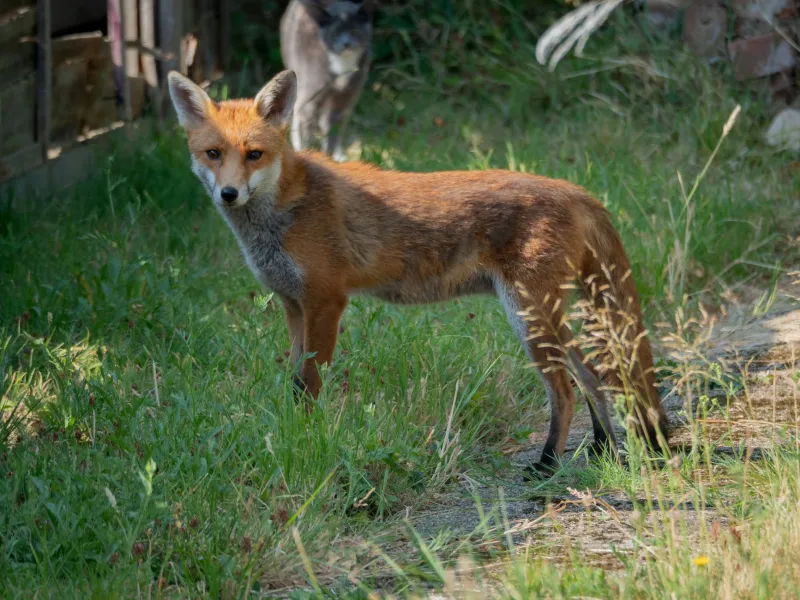
Across the United States, ecologists are documenting a pattern that challenges the foundational logic of the protected-area model: certain species are abandoning or underutilizing formally protected habitats and establishing themselves — sometimes with remarkable success — in cities, suburbs, and the messy, complicated landscapes that surround them. This is not simply a story about adaptable generalists making the best of a degraded world. It is a story about what animals are actually telling us, through their choices, about the state of the landscapes we have designated for their protection.
What the Data Is Showing
The evidence for urban wildlife flourishing is no longer anecdotal. Studies tracking species ranging from peregrine falcons to coyotes, from white-tailed deer to certain native bee communities, consistently find that urban and suburban populations are not merely persisting — they are, by several conventional metrics, thriving. Urban peregrine falcons in major US cities breed at higher densities and produce more fledglings per pair than their counterparts in many rural areas. Coyote populations in Chicago have been intensively studied for over two decades, revealing home ranges, survival rates, and dietary diversity that compare favorably with rural populations. Certain native bee species reach their highest densities not in agricultural landscapes or even natural areas, but in city parks and residential gardens with diverse plantings.
This is not a comfortable finding for those of us who work in and advocate for traditional conservation areas. But discomfort is not a reason to avoid a question. It is a reason to examine it carefully.
What Cities Are Accidentally Getting Right
The urban environment offers several things that formal refuges sometimes fail to provide consistently. Food availability is the most obvious. Cities are extraordinarily productive in terms of the caloric resources they make available to wildlife — from fruit-bearing ornamental trees to the invertebrate communities that flourish in the perpetually disturbed soils of parks and gardens. For generalist species, this abundance can compensate for many other stressors.
Structural diversity is another underappreciated urban asset. A mature urban neighborhood with a mix of building ages, garden styles, mature street trees, and varied terrain can offer a surprisingly high diversity of microhabitats. The patchwork quality that makes cities visually chaotic can, from an ecological standpoint, provide the kind of habitat heterogeneity that supports diverse communities.
Perhaps most counterintuitively, some urban areas offer lower predation pressure than rural or even formally protected landscapes. In cities, the apex predators that regulate prey populations in natural systems are largely absent. For prey species, this can translate into higher survival rates — at least in the short term.
What This Reveals About Protected Lands
Before concluding that cities are simply better habitats than refuges, it is worth examining what these patterns actually reveal — because the story is more complicated than a straightforward inversion of conservation values.
The species thriving in cities are, with few exceptions, generalists: animals with behavioral flexibility, broad dietary tolerance, and reproductive strategies that can absorb high turnover rates. The species most dependent on intact, undisturbed habitat — the interior-forest specialists, the large-territory predators, the organisms with narrow physiological tolerances — are not the ones showing up in urban parks. They are the ones quietly disappearing from landscapes that have been fragmented, degraded, or thermally altered.
This distinction matters enormously. When we celebrate urban wildlife success stories, we must be careful not to conflate the resilience of adaptable generalists with the health of the broader ecological community. A city full of coyotes and house sparrows is not a substitute for a functioning refuge. It is a symptom of the selective pressure that has removed less flexible species from the landscape.
At EC Wildlife Refuge, the presence of specialist species — the ones that cannot simply pick up and move to a city park — remains one of the most meaningful indicators of conservation success. Protecting the conditions these species require is precisely the work that distinguishes a genuine refuge from a managed landscape of ecological remnants.
The Harder Question
And yet the urban wildlife phenomenon does force a harder question: Are we managing protected lands as well as we believe we are?
In some cases, the honest answer may be no. Refuges that have experienced significant habitat degradation, invasive species pressure, or the disruption of natural disturbance regimes may no longer offer the structural and ecological complexity that wildlife requires. If a white-tailed deer population is consistently choosing suburban yards over refuge habitat, that is not simply evidence of the deer's adaptability. It is also information about the quality of what the refuge is offering.
This is not an argument for abandoning protected lands. It is an argument for managing them with greater rigor, greater honesty about their current condition, and greater willingness to invest in the restoration work that makes the difference between a refuge in name and a refuge in practice.
A Conservation Reckoning
The urban wildlife story is, at its core, a story about the gap between conservation intention and conservation outcome. It asks us to look beyond the boundaries we have drawn on maps and ask what is actually happening inside them — and whether the species that most need protection are finding what they need.
For visitors to EC Wildlife Refuge, this context offers a richer framework for interpreting what they observe. The presence of wildlife on refuge grounds is meaningful. So is the composition of that community — whether it reflects the full range of ecological roles and functional groups that a healthy system requires, or whether it represents the resilient remnant of a community under pressure.
The goal of this refuge has never been simply to provide a space where wildlife can exist. It is to protect the ecological processes and community relationships that allow wildlife to thrive in ways that matter — for the long-term integrity of the ecosystem and for the broader conservation landscape that depends on places like this to hold the line.
Cities can teach us something about wildlife resilience. They cannot replace what a genuine refuge, managed with care and scientific integrity, is built to do.