When the Calendar Breaks: How Phenological Mismatch Is Unraveling Food Webs at EC Wildlife Refuge

Nature runs on timing. Not the kind measured in minutes and hours, but in the accumulated warmth of lengthening days, the precise moisture content of thawing soil, and the angle of sunlight crossing a forest floor. For thousands of years, the species sharing this landscape have calibrated their most critical life events—flowering, hatching, migrating, breeding—to these environmental cues in a way that produced reliable overlap. Pollinators arrived when flowers opened. Nestlings hatched when caterpillars peaked. Migrating birds touched down when their prey was most abundant. That synchrony, refined over millennia, is now coming apart. At EC Wildlife Refuge, the consequences are visible in data, in field observations, and increasingly in the reproductive outcomes of species that have no mechanism to compensate for a calendar that is shifting faster than evolution can follow.
What Phenology Means and Why It Matters
Phenology is the scientific study of cyclic and seasonal natural phenomena—the timing of biological events in relation to climate and geography. It encompasses the date a particular wildflower first blooms in a given location, the week wood frogs begin calling from vernal pools, the day a ruby-throated hummingbird first appears at a trumpet vine. Individually, these events seem like pleasant seasonal markers. Ecologically, they are the gears of a finely calibrated machine.
When those gears turn in sequence, energy flows efficiently through the food web. Insects time their emergence to coincide with plant flowering, ensuring nectar and pollen are available for reproduction. Birds time their breeding to coincide with peak insect abundance, ensuring their nestlings have sufficient protein during the most demanding growth phase. Predators time their movements to coincide with the vulnerability windows of their prey. Disrupt the sequence at any point, and the effects cascade outward in ways that are difficult to predict and often impossible to reverse quickly.
The Mismatch in Practice: Three Case Studies from the Refuge
Migrating Warblers and the Caterpillar Window
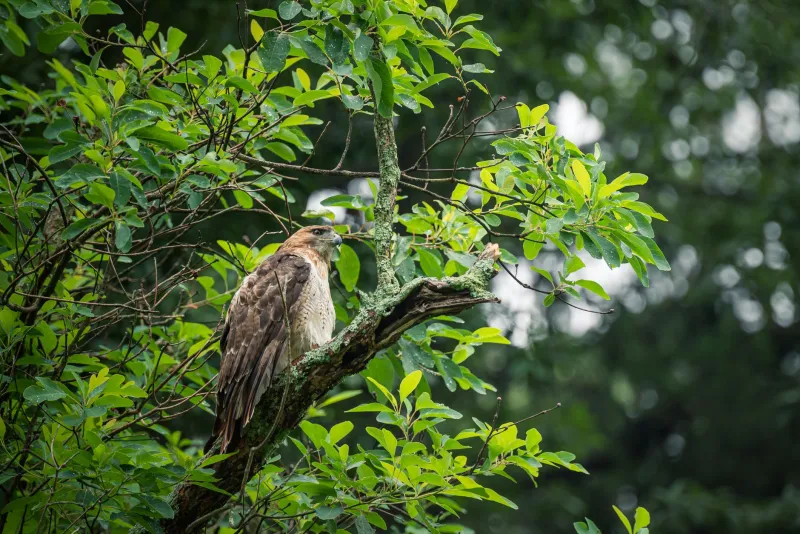
Several warbler species that pass through or breed within EC Wildlife Refuge's forested zones depend almost entirely on leaf-feeding caterpillars to fuel reproduction. Caterpillar emergence is closely tied to the timing of leaf-out in deciduous trees—a process that has shifted measurably earlier over the past several decades in response to warmer spring temperatures. Warblers, however, time their migration using day length—a cue that has not changed. The result is a growing gap between arrival and peak food availability. Birds that once touched down in the middle of a caterpillar flush now arrive at the tail end of it, or after it has passed entirely. Reduced food availability during the breeding window translates directly into smaller clutch sizes, lower chick survival rates, and declining population recruitment.
Native Bees and Early-Blooming Wildflowers
The refuge's native plant communities include several early-spring wildflowers that have historically served as critical nectar sources for native bee species emerging from overwintering dormancy. As winter temperatures moderate and false springs become more common, some of these plants are blooming weeks ahead of their historical averages. Native bees, whose emergence is triggered by soil temperature thresholds that warm more slowly than air temperatures, are not keeping pace. The flowers open, set seed without adequate pollination, and senesce before the bees that depend on them—and that the flowers depend on—have fully mobilized. Both parties lose. The plant's reproductive success declines. The bee colony emerges into a landscape where an important early-season resource has already been exhausted.
Amphibian Breeding and Spring Freeze Events
Wood frogs and spotted salamanders are among the earliest breeding amphibians in eastern North America, often moving to vernal pools during the first warm rains of late winter. Warming conditions have pushed these movements earlier in the year—sometimes into periods that still carry significant freeze risk. Eggs deposited during a premature warm spell and then exposed to a hard frost suffer catastrophic mortality. This is not a new phenomenon, but its frequency is increasing as the boundary between winter and spring becomes less defined. At the refuge, staff have documented breeding events followed by late-season ice formation in vernal pool habitats, with corresponding reductions in larval recruitment.
The Cascade Effect: When One Mismatch Triggers Another
What makes phenological mismatch particularly challenging from a management perspective is its tendency to compound. A reduction in caterpillar abundance—caused by the caterpillar's own mismatch with leaf-out timing—affects not only warblers but every insectivorous species in the food web. Reduced warbler populations affect the seed dispersal of plants whose seeds those birds carry. Reduced amphibian recruitment affects the invertebrate communities that larval amphibians consume, and the predators—herons, raccoons, garter snakes—that consume the amphibians themselves.
Food webs are not linear chains. They are networks, and disruption at any node sends signals—sometimes amplifying, sometimes dampening—to every connected node. The more nodes affected simultaneously, the less predictable the system's response becomes.
What Wildlife Managers Are Doing
EC Wildlife Refuge staff and partner researchers are pursuing several strategies to address the mismatch problem, though it is important to acknowledge that no refuge-level intervention can alter the underlying climatic drivers.
Long-Term Phenological Monitoring The refuge maintains multi-year records of first-bloom dates for key plant species, first-call dates for amphibians, and arrival dates for migratory birds. These records allow staff to quantify the rate at which different taxa are shifting their timing and identify which species are falling furthest behind. Data are contributed to regional and national phenology networks, including the USA National Phenology Network, to support broader analysis.
Habitat Buffering Maintaining diverse, structurally complex habitat helps reduce the severity of mismatch effects by providing ecological redundancy. A landscape with multiple flowering plant species staggered across a longer bloom window offers pollinators more opportunities to encounter available nectar even when the timing of individual species shifts. Refuge habitat management increasingly prioritizes this kind of temporal diversity alongside spatial diversity.
Assisted Microhabitat Management In some cases, managers can use microhabitat manipulation—adjusting canopy cover to alter soil temperature, for example—to moderate the pace at which temperature-sensitive cues are received by particular species. This is a nuanced and labor-intensive intervention, but in high-priority areas it offers a degree of local control over phenological timing.
Community Science Engagement Visitors and surrounding community members are increasingly valuable partners in phenological monitoring. The refuge's community science programs train volunteers to record standardized observations of plant and animal timing events, expanding the spatial coverage of monitoring efforts far beyond what staff capacity alone could achieve.
Living with Uncertainty
There is an honest difficulty at the center of phenological mismatch research: the future is not a simple extrapolation of current trends. Some species will adapt. Some interactions will reorganize around new timing relationships. Some losses will be permanent. The work of managing a refuge in this context is not the work of restoring a fixed historical baseline—it is the work of supporting ecological resilience in a system whose parameters are in motion.
What the data from EC Wildlife Refuge make clear is that the relationships between species are not incidental features of an ecosystem. They are its architecture. When the timing that holds those relationships together begins to slip, the structure itself is at risk. Understanding how, and how fast, is among the most consequential scientific questions this refuge—and every refuge in the country—is currently trying to answer.