The Kindness That Kills: Why Feeding Wildlife Does More Harm Than Good
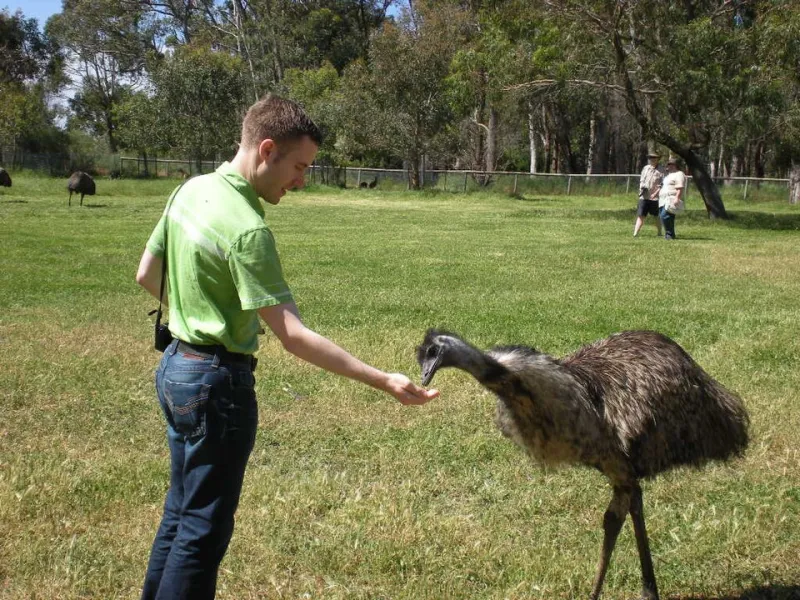
Photo: Michael Coghlan from Adelaide, Australia, CC BY 2.0, via Wikimedia Commons
There is something deeply human about wanting to feed a hungry animal. A deer browsing near the yard, a flock of Canada geese settling onto a park pond, a red fox lingering at the edge of a trail — these encounters stir something instinctive in us. We reach for bread, corn, or whatever happens to be on hand. The gesture feels generous, even responsible. The science, however, paints a far more sobering picture.
At EC Wildlife Refuge, we see the downstream effects of well-intentioned feeding with regularity. Animals that have grown accustomed to handouts, congregations of waterfowl dense enough to accelerate disease transmission, deer visiting neighborhoods in numbers that generate conflicts with vehicles and gardens alike. What begins as an act of compassion frequently becomes a slow-moving ecological problem — one that is difficult to reverse once it takes hold.
What Animals Actually Need vs. What We Offer Them
Wild animals have evolved over millennia to extract precise nutritional value from their native food sources. White-tailed deer, for instance, require a carefully balanced intake of proteins, carbohydrates, and minerals that shifts with the seasons. Their digestive systems are specifically adapted to process the browse, forbs, and mast crops found within their natural range.
When humans introduce corn, bread, or commercially sold "wildlife feed," the disruption is more significant than it appears. Deer fed heavily on corn during winter can develop a fatal condition called acidosis, in which a sudden shift in rumen pH overwhelms the digestive system. Waterfowl fed white bread develop a deformity known as angel wing — a permanent malformation of the wing joint caused by excessive carbohydrates during the growth period — which renders affected birds permanently flightless. Even well-meaning offerings of birdseed can introduce imbalances if they displace the insects, berries, and seeds that specific species genuinely require.
The nutritional argument alone is sufficient to give pause. But the consequences of supplemental feeding extend well beyond what an animal eats.
Dependency and the Erosion of Natural Behavior
Wildlife feeding does not simply supplement a diet — over time, it restructures behavior. Animals are highly efficient learners. When a reliable food source appears at a particular location, they return. They communicate that information through social networks. They adjust their home ranges, their movement patterns, and their foraging strategies accordingly.
Research on urban deer populations has demonstrated that consistent supplemental feeding concentrates animals in unnaturally small areas. This compression of space increases competition, elevates stress hormones, and raises the probability of disease transmission through direct contact. It also disrupts the dispersal patterns that healthy populations depend on to maintain genetic diversity.
For younger animals, the consequences are especially pronounced. Fawns, bear cubs, and juvenile birds that learn to associate humans with food do not simply become dependent — they lose the learned wariness that keeps them alive. A deer that approaches vehicles expecting food, a black bear that enters a garage in search of the birdseed it has come to expect, a coyote that has connected residential yards with easy calories: these animals are not emboldened so much as they are compromised. In many cases, habituation ends in lethal removal, a tragedy that is entirely preventable.
Disease Dynamics at the Feeding Station
Concentrated animals at artificial feeding sites create ideal conditions for pathogen transmission. Chronic Wasting Disease (CWD), a fatal neurological illness affecting deer, elk, and moose across much of the United States, spreads through direct animal-to-animal contact and through environmental contamination of soil and vegetation. Supplemental feeding stations are, by their nature, sites of concentrated contact — precisely the conditions that accelerate transmission.
Avian diseases present similar concerns. Dense congregations of waterfowl at feeding sites have been linked to outbreaks of avian cholera, duck virus enteritis, and, more recently, highly pathogenic avian influenza (HPAI). When dozens of birds share a small area of water or ground contaminated by feces, transmission rates climb sharply. The same logic applies to songbird feeders: improperly maintained feeders are well-documented vectors for salmonellosis and house finch eye disease (Mycoplasmal conjunctivitis), both of which can devastate local populations.
The Centers for Disease Control and Prevention and numerous state wildlife agencies have issued guidance cautioning against wildlife feeding for exactly these reasons. The risk is not theoretical — it is documented, recurring, and in some cases irreversible at the population level.
The Ecological Ripple Effect
Beyond individual animals, feeding disrupts the broader ecological relationships that a refuge like ours depends on. Overabundant deer, sustained by supplemental food through winter, exert disproportionate browsing pressure on native vegetation come spring. Regenerating forest understories — the seedling layer that sustains future canopy and provides critical cover for ground-nesting birds — can be stripped bare by populations that artificial feeding has allowed to grow beyond what the landscape can naturally support.
Waterfowl congregations fed at urban ponds accelerate eutrophication through waste accumulation, degrading water quality for the full suite of aquatic species that depend on those systems. The ecological accounting, when done honestly, reveals that the costs of supplemental feeding are rarely confined to the animals being fed.
What You Can Do Instead
The impulse behind wildlife feeding is not something to dismiss — it reflects a genuine desire to connect with and support the natural world. That impulse, redirected, can produce real conservation value.
Plant native species. A yard planted with native shrubs, wildflowers, and trees provides food in the form that local wildlife actually needs: fruits, seeds, nectar, and the insects that depend on native plants. A single native oak, for instance, supports hundreds of caterpillar species that are irreplaceable for nesting songbirds.
Provide water thoughtfully. A clean, regularly refreshed birdbath or shallow water feature offers genuine support without the risks associated with food aggregation. Keeping water fresh reduces disease risk significantly.
Maintain feeders responsibly. If you choose to feed birds, clean feeders with a dilute bleach solution at least every two weeks, remove uneaten seed promptly, and discontinue feeding during documented disease outbreaks in your area. Consult your state wildlife agency for current guidance.
Support habitat, not handouts. Donating to land conservation efforts, participating in habitat restoration volunteer days, and advocating for connected green spaces in your community all contribute to wildlife welfare in ways that feeding cannot replicate.
A Different Kind of Generosity
At EC Wildlife Refuge, our mission is grounded in the recognition that genuine care for wildlife requires understanding how animals actually live — not how we imagine they should. The most meaningful thing a person can do for a deer, a duck, or a songbird is not to offer a handful of corn, but to protect and restore the habitats and ecological relationships those animals depend on.
The kindness that endures is not the kind given impulsively at the back door. It is the kind built slowly, through habitat, through restraint, and through a willingness to let wild things remain wild. That, in the end, is what it means to truly support the animals we share this landscape with.