Nature on Its Own Terms: The Hard Truths Behind Authentic Wildlife Conservation
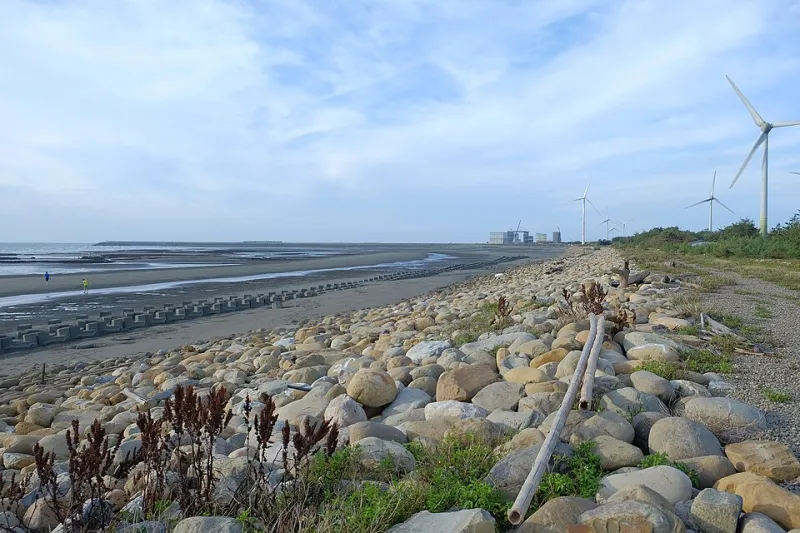
Photo: Taiwankengo, CC BY-SA 4.0, via Wikimedia Commons
There is a version of a wildlife refuge that exists primarily in the imagination—a peaceful sanctuary where deer graze undisturbed at dusk, songbirds fill the canopy with effortless harmony, and every creature thrives in perpetual balance. It is a compelling image. It is also, in important ways, a fiction.
The reality of managing a living ecosystem is far more complex, and at times, far more unsettling. At EC Wildlife Refuge, our staff and conservation partners navigate this tension every season. The honest work of protecting nature sometimes requires accepting outcomes that challenge our instincts, unsettle our visitors, and complicate the stories we tell about what a refuge is for.
This is not a comfortable conversation. But it is a necessary one.
When Nature Doesn't Cooperate with Our Expectations
Consider what happens when a disease outbreak moves through a white-tailed deer population. Chronic wasting disease, a fatal neurological condition that has spread across much of the United States, does not discriminate between the healthiest animals and the most visually striking ones. Watching a once-robust deer decline is difficult. Fielding questions from concerned visitors about why refuge staff are not intervening to save individual animals is harder still.
The answer, though imperfect, is grounded in ecological principle. Intervening in every natural mortality event would require a level of management that effectively transforms a refuge into a zoo. More critically, it would sever the very feedback loops that allow an ecosystem to regulate itself. Disease, predation, competition, and even starvation are not failures of a healthy ecosystem—they are, in many instances, its operating mechanisms.
This does not mean that all interventions are off the table. Invasive species management, habitat restoration, and targeted population monitoring are all legitimate tools. The distinction lies in whether an action supports the ecosystem's long-term integrity or simply makes humans feel better in the short term.
The Predator Problem
Few ecological dynamics test public tolerance more acutely than predation. When a great horned owl takes a rabbit within view of a trail, reactions among visitors vary enormously. Some express genuine awe. Others express distress. A smaller number express outrage, as though the owl has violated a social contract.
Conservation educators at EC Wildlife Refuge spend considerable time reframing predation not as violence but as energy transfer—the mechanism by which nutrients and vitality move through a food web. Without predators, prey populations expand beyond what local vegetation can support. Overgrazing degrades habitat structure. Species that depend on dense understory cover disappear. The ripple effects extend far beyond the immediate predator-prey relationship.
Yet even among conservation professionals, there are genuine ethical debates. How should a refuge respond when a recovering predator population begins impacting a species of concern? What obligations exist when natural processes threaten biodiversity goals that took years of careful work to achieve? These are not hypothetical questions. They are live dilemmas that require staff to weigh competing values with incomplete information and under public scrutiny.
The Visitor Expectation Gap
Part of what makes this work difficult is the expectation gap between what visitors hope to experience and what a functioning ecosystem actually delivers. American cultural narratives around wildlife tend toward the redemptive and the cuddly. Conservation messaging has, at times, reinforced this by emphasizing charismatic megafauna and feel-good restoration milestones.
There is nothing wrong with celebrating those milestones. But when the full picture is withheld—when the messiness, the mortality, and the moral ambiguity are edited out—visitors arrive unprepared for the complexity they encounter. And when reality diverges from expectation, the instinct is often to assign blame: to the refuge, to its management practices, or to nature itself.
At EC Wildlife Refuge, we believe that a more honest approach serves everyone better in the long run. Interpretive programming that acknowledges the full ecological cycle, including death and decomposition, builds a more resilient public understanding of conservation. Visitors who grasp the functional role of every organism—from apex predators to scavengers to soil microbes—are better equipped to support the policy decisions that protect wild places over time.
Rewilding and the Limits of Human Control
The broader rewilding movement, which advocates for restoring self-sustaining ecosystems with minimal ongoing human intervention, surfaces these tensions in their sharpest form. Rewilding projects across the United States have faced fierce local opposition when reintroduced predators begin affecting livestock, when beaver activity floods agricultural land, or when fire—a natural and often ecologically essential force—is allowed to burn.
The discomfort is real and should not be dismissed. Communities living adjacent to rewilded landscapes bear costs that distant supporters do not. Acknowledging this is not a concession to anti-conservation sentiment; it is a prerequisite for building the durable coalitions that long-term conservation requires.
What rewilding ultimately asks of us is a recalibration of what the word protection means. Does protecting nature mean shielding it from all harm, including natural processes? Or does it mean creating the conditions under which nature can exercise its own resilience? The latter vision is less tidy. It produces outcomes that are harder to photograph and harder to explain. But it is far more likely to yield ecosystems that can endure.
Sitting with Uncertainty
Perhaps the most important skill a conservation professional can develop is the capacity to sit with uncertainty—to make decisions under incomplete knowledge, to revise those decisions when new evidence emerges, and to communicate honestly with the public about both the rationale and the limitations of any given approach.
EC Wildlife Refuge does not have all the answers. No refuge does. What we have is a commitment to managing this landscape with ecological integrity as our north star, even when that commitment produces outcomes that are difficult to witness or explain.
The wild world does not owe us comfort. But in its complexity, its indifference, and its extraordinary capacity for self-renewal, it offers something more valuable: a model of resilience that human systems would do well to study carefully.
True conservation begins not with controlling nature, but with learning to trust it—on its own terms, at its own pace, and with all of its difficult honesty intact.