Fear, Function, and the Forgotten Role of the Refuge's Top Hunters
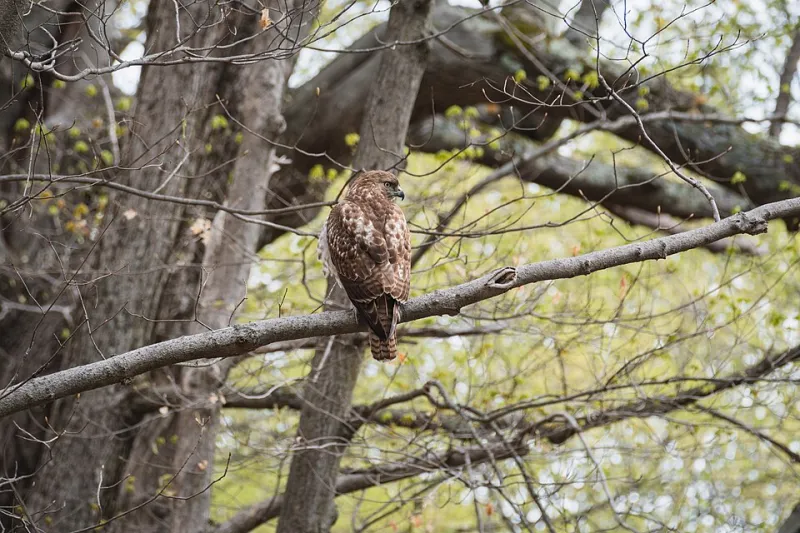
Photo: Christian David, CC BY-SA 4.0, via Wikimedia Commons
Let us be direct: apex predators make people uncomfortable. They are large, powerful, and built to kill. In the American cultural imagination, they occupy a complicated space—admired in wildlife documentaries, feared in rural communities, and misrepresented in ways that have justified their removal from vast stretches of the continent. The consequences of that removal are now among the most compelling natural experiments in the history of ecology, and the results are unambiguous. When top predators disappear, ecosystems unravel in ways that are difficult and expensive to reverse.
At EC Wildlife Refuge, the presence and management of apex predators is not an abstract policy debate. It is a practical, daily reality with measurable consequences for habitat quality, species diversity, and the long-term health of the refuge's ecosystems. Understanding why these animals matter—and challenging the misconceptions that continue to threaten them—is central to the refuge's conservation mission.
What Makes a Predator "Apex"?
The term apex predator refers to a carnivore that sits at the top of its local food web—one that is not, under normal circumstances, preyed upon by other animals. In North American ecosystems, this category includes gray wolves, mountain lions, bears, and large raptors such as golden eagles and great horned owls. Within aquatic systems, it encompasses species like osprey and certain fish-eating birds.
What distinguishes apex predators from other carnivores is not merely their position in the food chain but the disproportionate influence they exert on the systems they inhabit. Ecologists use the term "keystone species" to describe organisms whose impact on an ecosystem is far greater than their numerical abundance would suggest. Remove a keystone, and the arch collapses. This metaphor, while simple, captures something genuinely true about the functional role of top predators.
The Architecture of Fear
One of the most significant scientific advances in predator ecology over the past three decades has been the recognition that predators regulate ecosystems not only through direct predation—by killing and consuming prey—but through what researchers call the "landscape of fear." The mere presence of a predator, or even the perception of its presence, alters the behavior of prey species in ways that cascade through the entire food web.
The most thoroughly documented example of this phenomenon comes from Yellowstone National Park, where the reintroduction of gray wolves beginning in 1995 produced a series of ecological changes that no one had fully anticipated. Elk populations, which had been overgrazing riparian areas in the absence of wolves, began to avoid valley bottoms and riverbanks—not because wolves killed all of them, but because those open areas were dangerous. With reduced elk browsing pressure, willows, aspens, and cottonwoods recovered along stream corridors. Recovering vegetation stabilized stream banks, reduced erosion, altered water flow patterns, and created habitat that benefited beaver, songbirds, and fish. Wolves, in other words, changed rivers without ever touching them.
This cascade of effects—predator influencing prey behavior, prey behavior influencing vegetation, vegetation influencing hydrology—is what ecologists mean when they describe predators as ecosystem engineers.
Raptors as Refuge Managers
Within the boundaries of EC Wildlife Refuge, large raptors perform analogous regulatory functions at smaller scales. Red-tailed hawks, Cooper's hawks, and great horned owls exert significant pressure on small mammal and bird populations throughout the refuge's upland and woodland habitats. Their hunting activity is not simply a dramatic feature of a wildlife-watching visit—it is a mechanism that prevents any single prey species from reaching densities that would degrade habitat for others.
Consider the role of raptors in regulating vole and mouse populations. In years when these small mammals reproduce rapidly, their grazing and burrowing activity can substantially alter the structure of grassland plant communities. Unchecked, high rodent densities can accelerate soil disturbance, reduce plant species diversity, and create conditions less favorable to ground-nesting birds. Raptors—along with foxes, coyotes, and other mesopredators—provide the regulatory pressure that prevents these boom-and-bust dynamics from becoming destructive.
The presence of apex raptors also suppresses the activity of smaller predators in ways that benefit songbirds and other prey species. Great horned owls, for instance, actively displace and occasionally prey upon smaller owl species and Cooper's hawks. This intraguild predation keeps mesopredator populations in check, reducing overall predation pressure on the small birds and mammals that those medium-sized hunters target.
Confronting the Misconceptions
Despite the scientific clarity around predator ecology, misconceptions remain stubbornly persistent—and consequential. The most damaging of these is the belief that predator populations must be actively controlled to protect game animals or livestock, and that apex predators represent a net negative for rural communities and agricultural interests.
The evidence does not support this framing. Research conducted across multiple North American ecosystems consistently demonstrates that apex predators self-regulate in response to prey availability, territorial competition, and other ecological pressures. They do not eliminate prey populations—doing so would eliminate themselves. In regions where wolves, mountain lions, and other large carnivores have been reestablished or protected, deer and elk populations have generally remained robust, while the ecological benefits of predator presence have been substantial.
Livestock depredation, while a genuine concern for ranchers and farmers, affects a statistically small proportion of livestock operations and can be substantially mitigated through non-lethal deterrence methods—livestock guardian dogs, improved fencing, range riders, and carcass removal practices that reduce attractants. These tools are underutilized, in part because the cultural narrative around predators rarely includes the nuanced conversation about coexistence that is necessary to move beyond conflict.
The Refuge's Responsibility
EC Wildlife Refuge operates with an explicit commitment to maintaining and restoring the ecological integrity of the lands and waters within its stewardship. That commitment cannot be fully honored while treating apex predators as optional components of the system. They are not optional. They are structural.
This does not mean that predator management is simple or that the concerns of communities surrounding the refuge should be dismissed. It means that conservation decisions must be grounded in ecological science rather than fear, and that the case for predator protection must be made clearly, repeatedly, and with the patience that genuine public education requires.
The animals at the top of the food web are not villains in the story of this landscape. They are, in a very real sense, the editors—the forces that keep the narrative coherent, the populations balanced, and the habitat functioning as it should. Protecting them is not an act of romanticism. It is an act of ecological responsibility, and it is one that EC Wildlife Refuge takes seriously.
The next time you encounter a hawk circling over the refuge's meadows or hear a great horned owl call from the tree line at dusk, consider what that animal represents: not threat, but order. Not waste, but work. The predator is doing its job. Our job is to ensure it has the space to do so.