Out of Step with the Seasons: How a Warming Climate Is Disrupting Nature's Oldest Rhythms at EC Wildlife Refuge
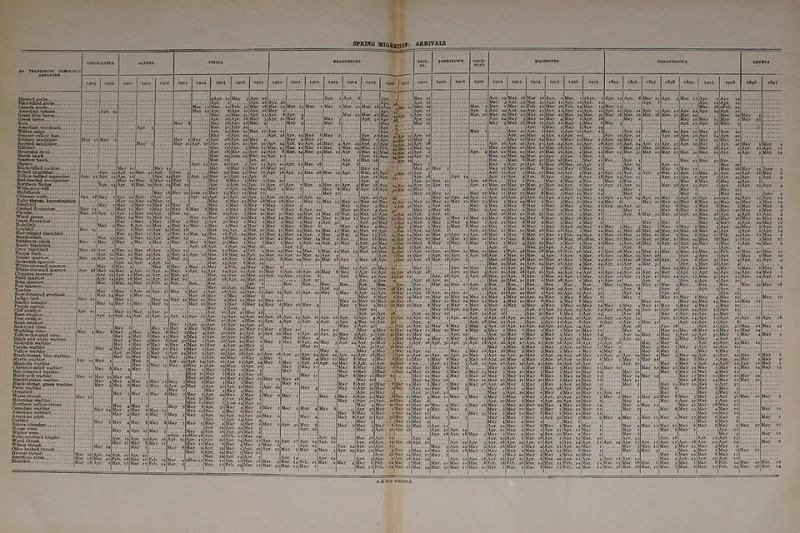
Photo: Eaton, Elon Howard, Public domain, via Wikimedia Commons
Nature has always kept its own calendar. The return of warblers in May. The first hepatica bloom pushing through leaf litter in early spring. The synchronized emergence of mayflies over cold streams, timed almost to the day for generations. These events did not happen by coincidence—they were the product of millions of years of evolutionary refinement, each species tuned to environmental cues that reliably signaled when to arrive, when to breed, and when to feed.
That calendar is being rewritten.
Across North America, warming temperatures are shifting the timing of biological events—a field of study known as phenology—in ways that are uneven, species-specific, and increasingly consequential. Some organisms are adjusting. Others cannot keep pace. And when two species that depend on each other arrive at different moments in the season, the mismatch can cascade into population declines that are difficult to reverse.
At EC Wildlife Refuge, these changes are not abstractions from a scientific journal. They are observations being recorded in field notebooks, trail camera logs, and vegetation surveys conducted by refuge biologists and trained volunteers every season.
What Phenology Measures—and Why It Matters
Phenology is the study of cyclical and seasonal natural phenomena: when the first monarch butterfly arrives, when a particular wildflower reaches peak bloom, when wood frogs begin calling from vernal pools. For most of human history, these events were observed and recorded informally—in farming almanacs, naturalist journals, and Indigenous ecological calendars that tracked seasonal change with remarkable precision.
Today, phenological data is among the most direct evidence available for measuring climate change's biological impact. When the average date of lilac bloom in New England advances by two weeks over fifty years, or when tree swallows begin nesting earlier than any point in recorded history, these are not statistical anomalies. They are biological signals that the environmental cues organisms rely upon are shifting faster than many can adapt.
The critical vulnerability lies not in any individual shift, but in what happens when species that are ecologically linked shift at different rates.
The Mismatch Problem: A Timing Crisis in Three Parts
Consider a common scenario playing out across refuge ecosystems throughout the eastern and midwestern United States. Many migratory songbirds—warblers, vireos, flycatchers—time their northward spring migration to coincide with the peak emergence of caterpillars and other leaf-feeding insects, which in turn tracks the timing of tree leafout. This three-part synchrony—birds, insects, trees—evolved over millennia to align within a narrow window.
As spring temperatures warm earlier, trees are leafing out sooner. Insects, which respond directly to temperature, are emerging earlier as well. But migratory birds, many of which calibrate their departure from wintering grounds in Central and South America to day length rather than temperature, are arriving on the same schedule as before—and finding the insect peak has already passed.
Researchers studying this dynamic in the Great Lakes region have documented declining reproductive success in several migratory warbler species correlated with increased phenological mismatch. Fewer caterpillars at peak chick-rearing time means fewer fledglings survive. The effect accumulates across breeding seasons.
At EC Wildlife Refuge, biologists have been tracking the arrival dates of several neotropical migrant species alongside vegetation phenology data for multiple years. Early observations suggest the window between tree leafout and peak warbler arrival is narrowing—a pattern consistent with broader regional trends.
Species Profiles: Who Is Struggling, and Who Is Adapting
The Ruby-throated Hummingbird arrives in the eastern United States each spring following a non-stop transoceanic flight from Central America. Its first meals depend on early-blooming flowers—particularly native species such as wild columbine and trumpet honeysuckle. As warm springs push bloom dates earlier, hummingbirds arriving on historical schedules may find fewer nectar sources available during the energetically demanding days immediately following migration.
Eastern Box Turtles, year-round residents of refuge woodlands, are showing signs of earlier emergence from winter dormancy in response to warmer soil temperatures. While this might initially appear advantageous, earlier activity exposes turtles to late-season freezes that historically did not overlap with their active period—a risk compounded by the fragmented habitat that limits their ability to seek shelter quickly.
Monarch Butterflies present a particularly complex phenological challenge. Their multi-generational migration is timed to milkweed availability across the central flyway. Earlier springs are advancing milkweed emergence in some regions, while drought-stressed summers are reducing plant quality. The result is a migration corridor that is becoming less predictable for a species already under significant pressure from habitat loss.
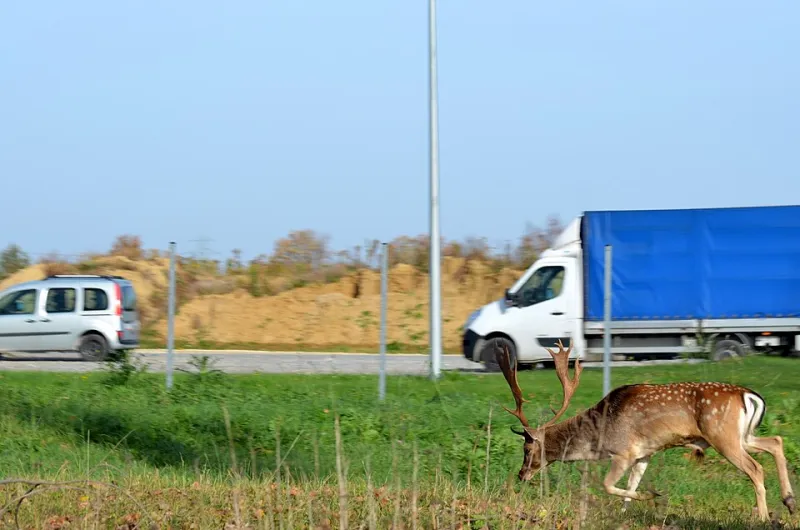
Not all species are struggling equally. White-tailed deer, generalist foragers with flexible dietary habits, appear to be adjusting reproductive timing with relative ease. American robins, which respond quickly to local temperature cues, are among the earliest spring arrivals and seem to be tracking seasonal shifts more successfully than long-distance migrants. Adaptability, it turns out, is partly a function of how tightly a species' biology is locked to fixed environmental signals.
What Refuge Biologists Are Watching
EC Wildlife Refuge participates in regional phenology monitoring networks, contributing seasonal observation data that feeds into long-term databases used by researchers across the country. Staff biologists document first-of-season observations for dozens of indicator species—the first osprey sighting over the marsh, the first chorus of spring peepers from the wetland edge, the date of peak wildflower bloom in the refuge's interior meadows.
This data, accumulated year over year, builds the kind of longitudinal record that makes climate-driven change visible in ways that a single season never could. It also provides an early warning system: when a species begins showing consistent departure from its historical phenological range, that is a signal warranting closer investigation.
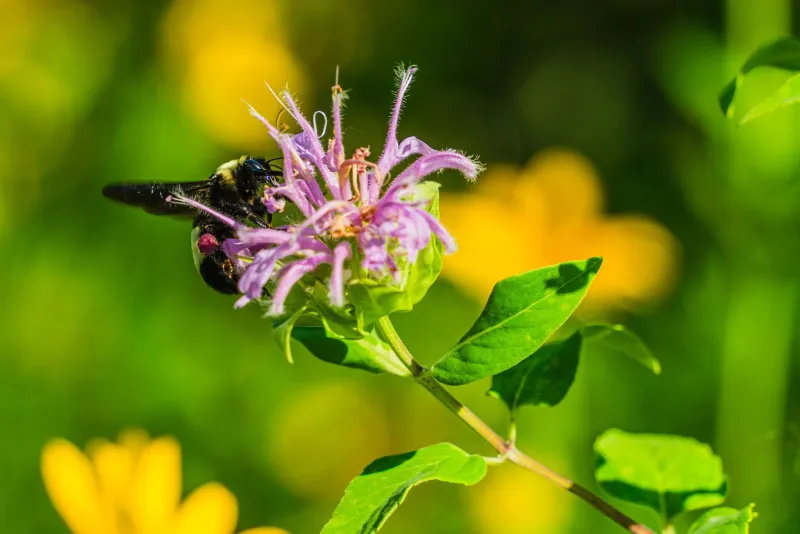
Beyond monitoring, the refuge is engaged in habitat management strategies designed to buffer species against phenological stress. Maintaining diverse native plant communities—with species that bloom across a wide seasonal window rather than a narrow peak—provides more resilient forage resources for pollinators and hummingbirds facing uncertain timing. Protecting and restoring wetland areas supports amphibian species whose breeding cycles depend on stable moisture and temperature regimes.
How Visitors and Community Members Can Help
Citizen science plays a meaningful role in phenological research, and EC Wildlife Refuge actively invites community participation in seasonal monitoring efforts. Submitting observations through platforms such as iNaturalist, Journey North, and the USA National Phenology Network contributes to datasets that inform regional conservation planning.
At home, the choices individuals make in their gardens have direct relevance to phenological resilience. Planting native species that provide staggered bloom times—from early spring ephemerals through late-season goldenrod and asters—creates a more dependable resource landscape for pollinators and hummingbirds navigating an increasingly unpredictable seasonal calendar. Reducing lawn area, eliminating pesticide use, and supporting local land conservation efforts all contribute to the broader habitat connectivity that gives wildlife the geographic flexibility to respond to changing conditions.
The seasonal rhythms of the natural world are not merely beautiful. They are functional—the timed coordination of thousands of biological events that sustain the ecosystems on which all species, including our own, depend. When those rhythms fall out of alignment, the consequences are not always immediate or obvious. But they accumulate.
At EC Wildlife Refuge, paying attention to the calendar—the real one, written in migration arrivals and bloom dates and calling frogs—is among the most important work we do. And it is work that benefits immeasurably from more observers, more seasons, and more people who understand what they are watching.