Bring the Refuge Home: How to Build a Native Plant Habitat Your Local Wildlife Will Actually Use
A visit to EC Wildlife Refuge often leaves people with a familiar feeling: a quiet wish that the natural world they encountered here could follow them home. The good news is that, to a meaningful degree, it can. Native plant gardening — the practice of cultivating species indigenous to your region — is one of the most impactful conservation actions an individual landowner can take. And the ecological principles at work inside the refuge apply just as readily to a suburban backyard.
This guide draws directly from the plant communities found at EC Wildlife Refuge to help you design a yard that does more than look beautiful. It functions.
Why Native Plants Are the Foundation
Native plants and native wildlife evolved together over thousands of years. The relationships that developed during that time are specific, intricate, and often non-negotiable.
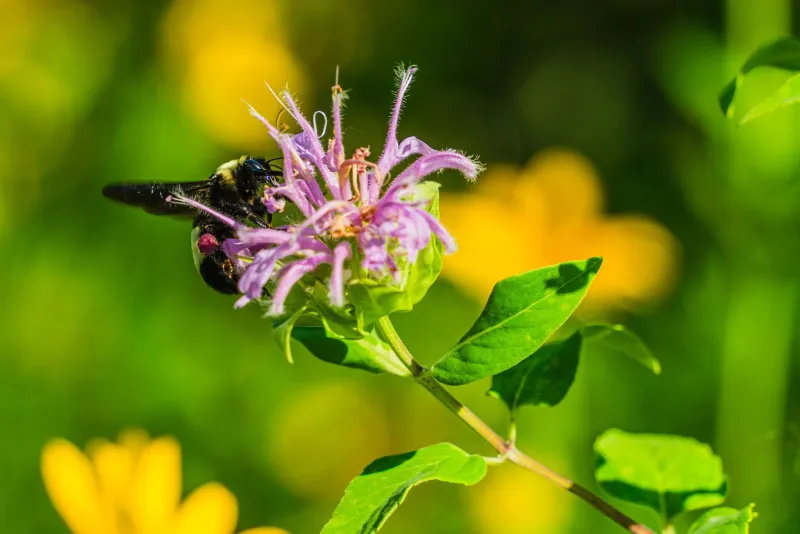
Consider the monarch butterfly. Its larvae will feed on milkweed and essentially nothing else. Or consider the native bees — more than 4,000 species in the United States — many of which have evolved to collect pollen from a narrow range of plant genera. Introduce a non-native ornamental into your yard, and it may look attractive to human eyes while offering almost nothing to the insects and birds that depend on native flora.
Research by entomologist Dr. Doug Tallamy and colleagues has demonstrated that native oak trees support more than 500 species of caterpillars, which in turn are the primary food source for nesting songbirds. A non-native ornamental tree planted in the same spot might support fewer than five. That difference is the difference between a yard that participates in the local food web and one that is ecologically inert.
Step One: Assess What You Have
Before purchasing a single plant, spend time observing your yard across different times of day and season.
- Sun exposure: Which areas receive full sun (six or more hours daily), partial shade, or deep shade? Native plant selection depends heavily on light availability.
- Soil moisture: Does water pool after rain, or does your soil drain quickly? Both wet and dry conditions have corresponding native plant communities.
- Existing vegetation: Are there already native plants on your property? Preserving what is already there is always preferable to starting from scratch.
- Wildlife activity: What birds, insects, or other animals are already visiting? Understanding your baseline helps you identify what additional species you might attract.
Step Two: Select Plants That Mirror the Refuge's Ecology
The plant communities at EC Wildlife Refuge represent the natural vegetation of this region in a relatively intact form. Drawing from that palette when selecting plants for your own property ensures ecological compatibility.
For Sunny Areas and Open Gardens
Purple coneflower (Echinacea purpurea) is among the most versatile native perennials available. Its nectar supports bumblebees, sweat bees, and butterflies throughout summer, while its seed heads persist into winter and attract goldfinches and chickadees. It thrives in well-drained soil and tolerates summer drought once established.
Black-eyed Susan (Rudbeckia hirta) blooms prolifically from early summer through fall, providing a long season of forage for native bees. It self-seeds readily, meaning a small initial planting can expand naturally over time.
Little bluestem (Schizachyrium scoparium) is a native grass that offers exceptional wildlife value. Its seeds feed sparrows and juncos through winter, its stems provide nesting material, and its dense clumps shelter overwintering insects. It also turns a striking copper-red in autumn, offering considerable ornamental appeal.
For Shaded or Partially Shaded Areas
Wild columbine (Aquilegia canadensis) produces distinctive red and yellow flowers in early spring, timed precisely to coincide with the arrival of ruby-throated hummingbirds from their wintering grounds. Few plants illustrate the concept of co-evolution more elegantly.
Virginia bluebells (Mertensia virginica) carpet the woodland floor with blue flowers each April before going dormant by early summer. They are particularly important for queen bumblebees emerging from winter dormancy and seeking early-season pollen.
Native ferns, including cinnamon fern (Osmundastrum cinnamomeum) and Christmas fern (Polystichum acrostichoides), provide structural cover and nesting habitat for ground-foraging birds such as ovenbirds and hermit thrushes.
For Wet or Low-Lying Areas
Swamp milkweed (Asclepias incarnata) thrives in moist soils and provides essential larval habitat for monarch butterflies. It also attracts a remarkable diversity of native bees and wasps.
Joe-Pye weed (Eutrochium purpureum) can reach six feet in height and produces large, flat-topped flower clusters that are magnets for swallowtail butterflies in late summer.
Step Three: Build in Layers
Healthy natural habitats are not flat. They are structured vertically, with canopy trees, understory shrubs, herbaceous plants, and ground cover each occupying distinct layers. A yard that replicates this structure provides habitat for a far greater diversity of species than a simple lawn with a few flower beds.
If space permits, consider adding a native shrub layer using species such as buttonbush (Cephalanthus occidentalis), native viburnums, or American beautyberry (Callicarpa americana). These shrubs produce berries that are critical food sources for migratory songbirds during fall passage — the same birds that pass through EC Wildlife Refuge on their way south.
Step Four: Reduce Lawn and Embrace Imperfection
Conventional turfgrass is, from a wildlife perspective, among the least productive surfaces a yard can contain. Reducing lawn area — even incrementally — and replacing it with native plantings yields significant ecological gains.
Leave leaf litter in place beneath shrubs and in garden beds through winter. Fallen leaves shelter overwintering moth and butterfly pupae, ground beetles, and other invertebrates that form the base of the food chain. Resist the urge to cut back spent flower stalks until late spring; hollow stems and seed heads provide shelter and food through the coldest months.
A Yard Transformed: What to Expect
Homeowners who have converted traditional lawns to native plant gardens consistently report the same progression. In the first season, pollinators arrive — bees, butterflies, and moths that were previously absent or scarce. By the second and third seasons, birds follow, drawn by the insects the plants support. Within five years, a well-designed native garden can function as a genuine wildlife corridor, connecting isolated patches of habitat across a neighborhood or community.
The refuge does not end at its boundary. Every native plant you put in the ground extends its reach a little further.