Signal and Sky: The Technology Revolutionizing Migratory Bird Research at EC Wildlife Refuge
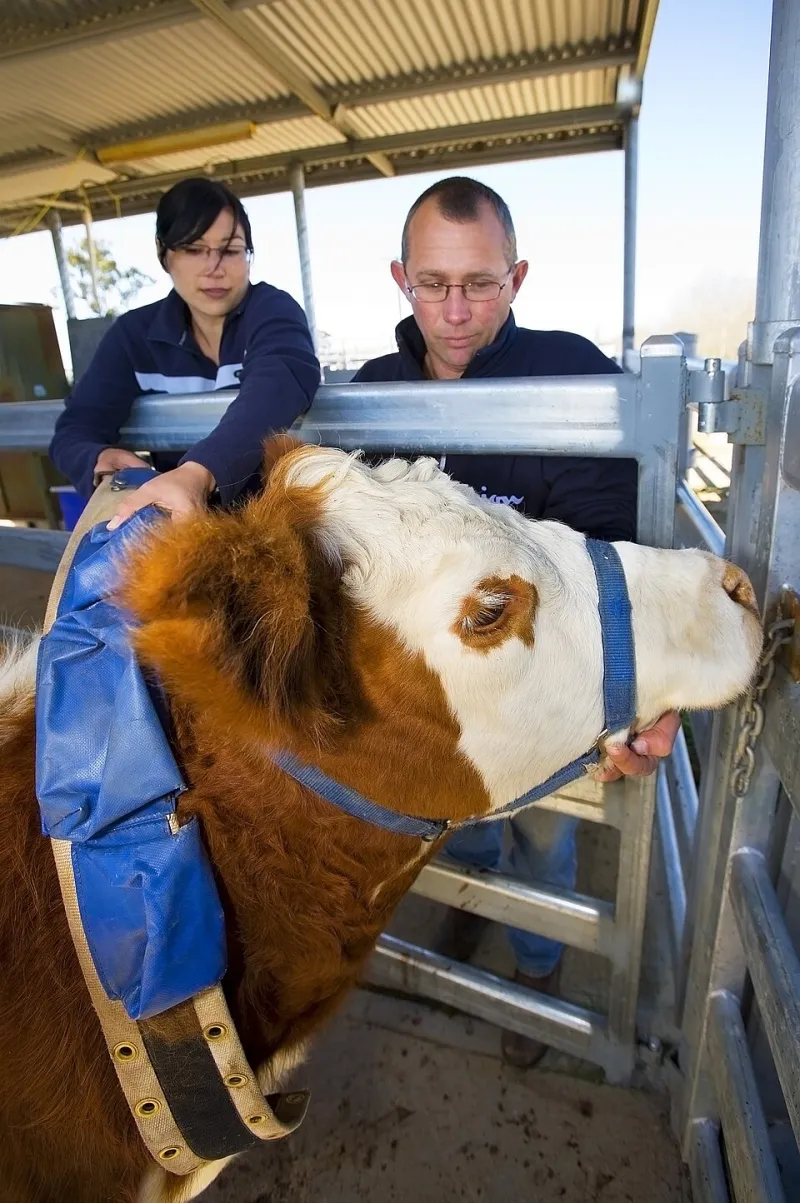
Photo: David McClenaghan, CSIRO, CC BY 3.0, via Wikimedia Commons
Every spring and fall, billions of birds traverse the skies above North America, navigating by stars, magnetic fields, and memory accumulated over generations. For most of human history, the details of these journeys remained stubbornly invisible. Today, the research team at EC Wildlife Refuge is peeling back that mystery one data point at a time — and what they are finding is both remarkable and urgent.
From Band and Binoculars to GPS and Radar
Traditional bird banding has served ornithologists well for more than a century. A small aluminum band fitted around a bird's leg can, when the bird is recaptured or recovered, reveal something about where it has been. But recapture rates are low, and the picture that emerges is fragmentary at best.
Modern telemetry has changed the equation entirely. EC Wildlife Refuge researchers now deploy solar-powered GPS transmitters that weigh as little as 0.5 grams — light enough to attach to warblers and shorebirds without meaningfully affecting their flight. These devices ping their location every few minutes during active migration, transmitting data to a network of automated receiver towers that stretches from the Gulf Coast to the Canadian boreal forest.
"We used to celebrate when we got a single resighting of a banded bird," says one refuge ornithologist who has spent more than a decade studying shorebird migration at the refuge. "Now we're watching individual animals make decisions in real time. It's a completely different science."
What the Radar Reveals
GPS tags tell the story of individual birds. Weather-surveillance radar — specifically the national NEXRAD network — tells the story of entire populations moving at once.
Birds appear on Doppler radar as diffuse, expanding rings that bloom outward from a radar station shortly after sunset on favorable migration nights. Researchers at EC Wildlife Refuge have partnered with university collaborators to analyze decades of archived radar data, identifying long-term trends in the timing, volume, and altitude of nocturnal migration over the refuge and surrounding landscape.
The findings have been sobering. Overall migration volume across much of the eastern United States has declined measurably over the past 25 years, a pattern consistent with broader estimates suggesting North America has lost nearly three billion birds since 1970. But the radar data also reveals something more nuanced: certain stopover sites, including areas within and adjacent to EC Wildlife Refuge, continue to attract disproportionately high concentrations of migrants. These locations function as critical refueling stations, and their protection carries outsized conservation value.
Acoustic Monitoring: Listening for the Night Flights
Many migratory songbirds travel under cover of darkness, communicating through brief, high-pitched calls that help flocks maintain cohesion in the night sky. These flight calls are species-specific, and they can be recorded.
EC Wildlife Refuge has installed a network of autonomous recording units throughout the property. Each unit captures audio continuously from dusk to dawn during migration season. Artificial intelligence algorithms then sort through thousands of hours of recordings, flagging and identifying flight calls by species. The resulting dataset documents which birds are passing over on any given night — including species rarely detected by daytime observation.
"Last October, our acoustic monitors picked up more than 40 species in a single night," notes a refuge biologist who oversees the acoustic program. "Several of them we had almost no previous documentation of at this site. The calls don't lie."
Surprising Findings That Are Reshaping Strategy
The convergence of GPS tracking, radar analysis, and acoustic monitoring has produced several findings that have directly influenced how EC Wildlife Refuge manages its land.
First, researchers discovered that many species are departing from the refuge on a tighter schedule than previously understood. Rather than lingering for days, some shorebird species spend fewer than 36 hours at a stopover before resuming migration — meaning the availability of food resources during that narrow window is critically important. This finding has accelerated efforts to restore and maintain shallow-water mudflat habitats within the refuge, which support the invertebrate communities these birds depend on.
Second, GPS data has revealed that several species tracked at EC Wildlife Refuge maintain strong fidelity to specific stopover locations across multiple years. Individual birds return to the same patches of habitat season after season. This site fidelity underscores why habitat loss at any single stopover can have cascading effects on population-level survival.
Third, survival-rate analyses drawn from long-term tracking data suggest that conditions experienced during migration — not just on breeding or wintering grounds — play a significant role in determining whether individual birds survive to the following year. The refuge, as a stopover site, is not merely a waypoint. It is an active determinant of conservation outcomes.
How Visitors Can Engage with the Science
The research happening at EC Wildlife Refuge is not confined to scientists. Visitors to the refuge during spring and fall migration can observe banding demonstrations at the refuge's licensed banding station, where trained staff carefully extract birds from mist nets, collect measurements, and — when appropriate — attach tracking devices before release.
The refuge also participates in eBird, the Cornell Lab of Ornithology's community science platform, and actively encourages visitors to submit their own sightings. Every observation contributes to a growing continental database that researchers, including the team at EC Wildlife Refuge, use to track population trends and refine conservation priorities.
The skies above this refuge have always carried stories. The tools now available to read those stories have never been more powerful — and the imperative to act on what they reveal has never been more pressing.