Neighbors by Nature: A Homeowner's Guide to Living Alongside Urban Wildlife
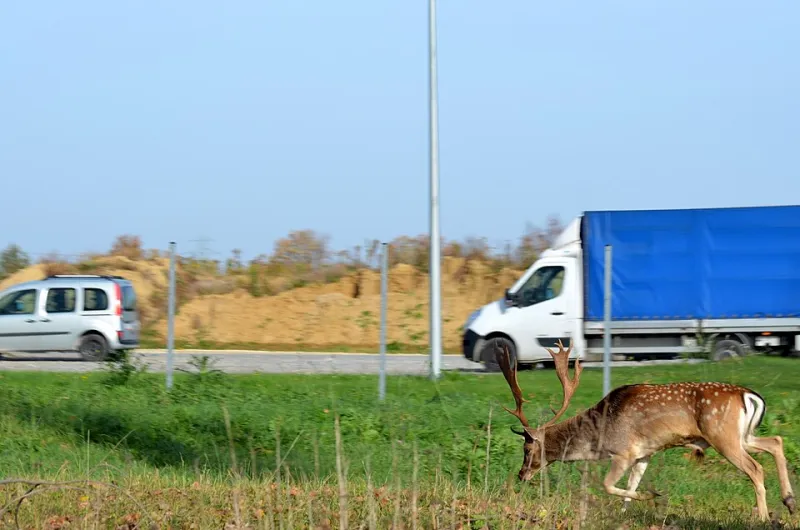
Photo: Silar, CC BY-SA 4.0, via Wikimedia Commons
Every morning, somewhere in suburban America, a homeowner steps outside to find their garbage strewn across the driveway, their garden stripped of tomatoes, or a family of deer standing calmly in the middle of the lawn. These encounters, once considered rare, have become routine as residential development continues to push deeper into ecosystems that wildlife have occupied for centuries. At EC Wildlife Refuge, we recognize that the boundary between the refuge and the surrounding community is not a hard line—it is a living, shifting interface where conservation work must extend well beyond our borders.
Understanding how to navigate these moments is not simply a matter of personal convenience. The choices homeowners make when wildlife enters their space have measurable consequences for animal behavior, population health, and the broader ecological networks that sustain our region.
Why Wildlife Is Showing Up in Your Yard
Before reaching for a deterrent or calling animal control, it helps to understand why animals venture into residential areas in the first place. Habitat fragmentation is the primary driver. As forests, wetlands, and open fields are subdivided and developed, animals that once had vast territories are compressed into smaller patches of suitable habitat. Residential neighborhoods, with their mature trees, ornamental plantings, water features, and abundant food waste, often provide resources that degraded natural landscapes no longer can.
Seasonal pressures compound the issue. White-tailed deer populations surge in autumn as younger males disperse in search of new territory. Raccoons and opossums become bolder in late winter when natural food sources are depleted. Black bears in states like New Jersey, Virginia, and the western Carolinas increasingly forage in neighborhoods during hyperphagia—the period of intense pre-hibernation feeding. These are not random or aberrant behaviors. They are rational responses to the conditions humans have created.
Humane Deterrent Strategies That Actually Work
The good news is that a range of effective, non-lethal strategies can significantly reduce conflict without harming the animals involved.
Secure your attractants first. The single most impactful step any homeowner can take is eliminating easy food sources. Use wildlife-resistant garbage cans with locking lids, bring bird feeders indoors at night, and harvest ripe fruit from trees before it falls. Compost bins should be enclosed rather than open-pile. These measures remove the primary incentive for most opportunistic species to visit in the first place.
Use physical barriers strategically. For gardens, a properly installed fence can deter deer with surprising effectiveness. Deer are reluctant to jump into spaces they cannot see clearly, so an eight-foot single fence or a double-row fence spaced four feet apart exploits this behavioral tendency. For smaller mammals like groundhogs and rabbits, an L-shaped wire mesh barrier buried six inches underground and extending outward prevents burrowing beneath the perimeter.
Apply sensory deterrents with realistic expectations. Motion-activated lights and sprinkler systems can discourage nocturnal visits from raccoons and skunks, though animals often habituate to these stimuli over time. Rotating deterrent types—combining scent repellents, visual disturbances, and physical barriers—tends to produce more lasting results than any single method. Commercial repellents containing predator urine or capsaicin can be applied around garden perimeters, though reapplication after rain is essential.
Modify your landscaping thoughtfully. Replacing certain ornamental plants with species that wildlife find less palatable is a long-term investment in conflict reduction. Native plantings that support pollinators and songbirds often provide this benefit while simultaneously enhancing the ecological value of your property.
What Not to Do
Well-intentioned homeowners sometimes make choices that worsen the very problems they are trying to solve. Feeding wildlife—even with the goal of directing animals away from gardens—reliably increases local population density and erodes the natural wariness that keeps animals safe around humans. A habituated raccoon or coyote is a vulnerable one.
Trapping and relocating animals is another common but counterproductive response. In most US states, relocating wildlife without a permit is illegal. Beyond the legal dimension, relocation is rarely effective: the animal is deposited in unfamiliar territory, often during a season when resources are scarce, and faces significant mortality risk. Meanwhile, the conditions that attracted the original animal remain unchanged, and a replacement individual typically appears within weeks.
Perhaps most critically, never attempt to handle wildlife directly or interfere with nesting young. Animals that appear injured or orphaned should be reported to a licensed wildlife rehabilitator rather than managed at home.
Your Observations Are Valuable Data
Here is something that may surprise you: the wildlife interactions you experience in your neighborhood are scientifically meaningful. Researchers at EC Wildlife Refuge are actively building a picture of how urban and peri-urban wildlife populations move, feed, reproduce, and respond to human pressure—and citizen observations are an essential component of that work.
When you document a coyote sighting, note the time of day a fox crosses your yard, or photograph tracks in the snow, you are generating data points that, in aggregate, reveal patterns no single research team could capture alone. These patterns inform how the refuge approaches community outreach, where wildlife crossing infrastructure may be most urgently needed, and how local conservation policies might be refined to better protect both residents and animals.
EC Wildlife Refuge's community science programs offer structured ways to contribute these observations. Standardized reporting through our platforms ensures that your data integrates with the broader dataset our researchers rely on. The more consistently homeowners across the region participate, the more accurate and actionable that picture becomes.
Coexistence as Conservation
The wildlife that appears in your backyard is not a problem to be eliminated. It is evidence of ecological persistence—of animals adapting, sometimes remarkably well, to a landscape that has been profoundly altered by human activity. How we respond to that persistence matters enormously.
At EC Wildlife Refuge, we believe that conservation does not begin and end at the refuge boundary. It extends into every neighborhood, yard, and community where people and wildlife share space. By choosing informed, humane responses to wildlife encounters—and by sharing what you observe—you become an active participant in the conservation mission that defines this refuge and the ecosystems it protects.