Ancient Wisdom, Modern Results: How Indigenous Land Stewardship Is Restoring Ecological Balance at EC Wildlife Refuge
For thousands of years before modern conservation science existed, Indigenous peoples managed landscapes through carefully observed, seasonally attuned practices that sustained extraordinary biodiversity. At EC Wildlife Refuge, a growing partnership with Indigenous land stewards is demonstrating that these time-tested methods are not relics of the past — they are blueprints for the future.
A Knowledge System Measured in Millennia
Western conservation ecology, as a formal discipline, is roughly 150 years old. Traditional Ecological Knowledge — the accumulated understanding that Indigenous communities have developed through sustained, intergenerational observation of local landscapes — predates that by centuries, in many cases by millennia. The distinction matters enormously when we consider what each system has had time to learn.
Modern conservation frequently operates in reactive mode: identifying a problem, designing an intervention, measuring outcomes over a few grant cycles, and adjusting accordingly. Traditional land management, by contrast, was designed to be self-correcting across generations. Practitioners observed how a landscape responded to fire, harvest, flood, and drought not just across one season but across a human lifetime — and they encoded those observations into ceremony, oral tradition, and seasonal practice.
At EC Wildlife Refuge, staff ecologists have spent the past several years working alongside representatives from regional Indigenous nations to understand what those encoded practices actually accomplish — and the results have been striking.
Controlled Burns: Fire as a Management Tool, Not a Threat
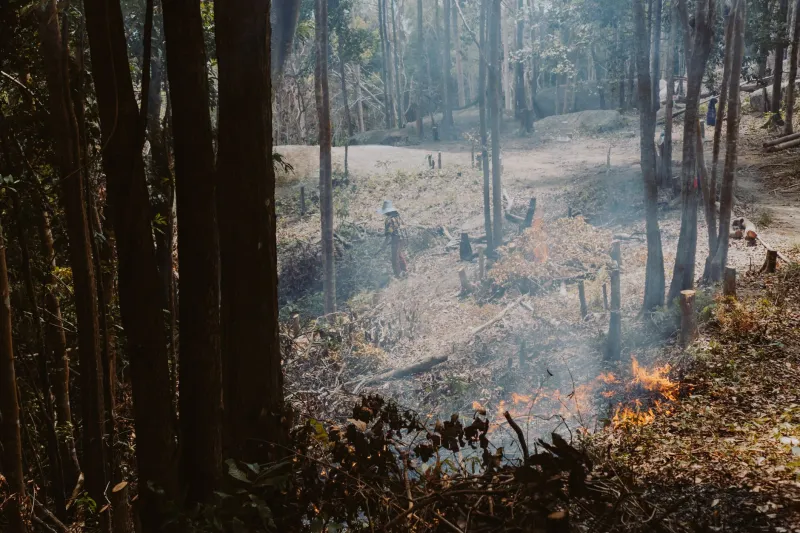
Perhaps the most visible Indigenous land management practice being reintegrated at the refuge is prescribed burning. For much of the twentieth century, fire suppression was the dominant paradigm in American land management. The consequences of that paradigm — unnaturally dense forest understories, accumulated fuel loads, reduced habitat diversity — are now well documented.
Indigenous communities across North America used fire deliberately and skillfully for thousands of years. Seasonal burns cleared undergrowth, promoted the growth of food and medicinal plants, improved sight lines for hunting, and encouraged the edge habitat that many wildlife species depend upon. The burns were not random; they were calibrated to wind direction, soil moisture, season, and the specific ecological goals of the community.
At EC Wildlife Refuge, prescribed burns conducted in consultation with Indigenous partners have produced measurable outcomes within just a few growing seasons. Native grasses and forbs have reestablished in areas where invasive shrubs had dominated for decades. Ground-nesting bird populations have shown increased activity in post-burn zones. White-tailed deer, wild turkey, and numerous pollinator species have been documented utilizing the regenerating habitat at higher rates than adjacent unburned areas.
"The land responds to fire the way it always has," said one Indigenous cultural practitioner involved in the refuge's collaborative program. "It's not about destroying anything. It's about making space for what belongs here."
Selective Harvesting and the Logic of Restraint
Another practice generating significant scientific interest is selective harvesting — the deliberate, regulated removal of certain plant and animal species in ways that stimulate population health rather than depleting it. Modern resource management has long recognized the concept of sustainable yield, but Indigenous harvesting traditions often operate according to a more sophisticated logic: one that accounts for relationships between species rather than managing each in isolation.
At EC Wildlife Refuge, this relational approach has informed how refuge staff think about managing plant communities along the riparian corridor. Indigenous partners identified several native plant species that, when selectively harvested at specific growth stages, responded with increased vigor and greater seed production — effectively functioning as a form of ecological pruning that benefited not only the harvested species but the insects, birds, and mammals that depended on it.
This kind of knowledge is difficult to replicate through short-term experimental trials. It requires the kind of patient, cumulative observation that only long-term presence in a landscape can produce.
Seasonal Rhythms and the Concept of Ecological Timing
One of the most consequential insights emerging from the refuge's Indigenous partnerships concerns timing. Modern land management interventions — vegetation removal, water control structure adjustments, habitat restoration plantings — are frequently scheduled according to logistical convenience or funding cycles. Indigenous practices, by contrast, were calibrated to the phenological rhythms of the landscape itself: the timing of migrations, breeding seasons, plant dormancy, and hydrological cycles.
Refuge ecologists have begun incorporating Indigenous seasonal calendars into their management planning, aligning interventions with natural cycles in ways that reduce unintended disturbance to nesting wildlife and maximize the effectiveness of habitat work. Early results suggest that timing adjustments alone — without any other changes to management protocols — can significantly improve outcomes for several sensitive species at the refuge.
What This Means for the Future of Wildlife Management
The integration of Traditional Ecological Knowledge into formal conservation programs is not without its complexities. Questions of intellectual property, cultural sovereignty, and equitable partnership must be navigated with care and genuine respect. Indigenous knowledge systems are not simply databases to be mined for useful techniques; they are living cultural frameworks that belong to the communities that developed them.
At EC Wildlife Refuge, the approach has been one of genuine collaboration rather than extraction. Indigenous partners hold decision-making authority over which practices are shared, how they are implemented, and how outcomes are interpreted. The refuge's role is to provide the land, the logistical support, and the scientific infrastructure to document results — not to appropriate knowledge or claim credit for insights that originated elsewhere.
The broader implication for wildlife management across the United States is significant. As climate change accelerates and conventional conservation approaches struggle to keep pace with rapidly shifting baselines, land managers are increasingly recognizing that the most sophisticated ecological knowledge available may not be in a peer-reviewed journal. It may be in the oral traditions of communities who have been paying attention to a specific landscape for far longer than any scientific institution has existed.
At EC Wildlife Refuge, that recognition is no longer theoretical. It is reshaping how the land is managed, season by season, fire by fire, harvest by harvest — and the ecosystems here are responding accordingly.