The Unseen Workforce: How Decomposer Communities Transform Death Into Life at EC Wildlife Refuge
A white-tailed deer collapses at the edge of a meadow. A red oak drops its last leaves before winter. A salmon, spent after spawning, settles into the streambed. To the casual observer, these are endings. To the ecological community working beneath the surface of EC Wildlife Refuge, they are invitations.
Decomposition is not decay in any bleak or wasteful sense. It is, more precisely, a transfer — a methodical, biologically sophisticated process through which organic matter is disassembled, consumed, and ultimately returned to the soil as the raw material for new growth. The organisms that perform this work constitute one of the most consequential yet least celebrated communities in any functioning ecosystem. At EC Wildlife Refuge, understanding and protecting these communities has become an increasingly central component of responsible land stewardship.
A Community of Specialists
The decomposer community is not a single guild of organisms but a layered succession of specialists, each arriving at a different stage of breakdown with a different set of tools.
The first responders to a carcass or a fallen log are often the largest and most visible: carrion beetles, blow flies, and burying beetles, which arrive within hours of death. Carrion beetles of the genus Nicrophorus are particularly remarkable. Small breeding pairs will locate, bury, and provision a carcass as a food source for their larvae — a level of parental investment unusual among insects and one that accelerates decomposition while cycling nutrients directly into the soil column.
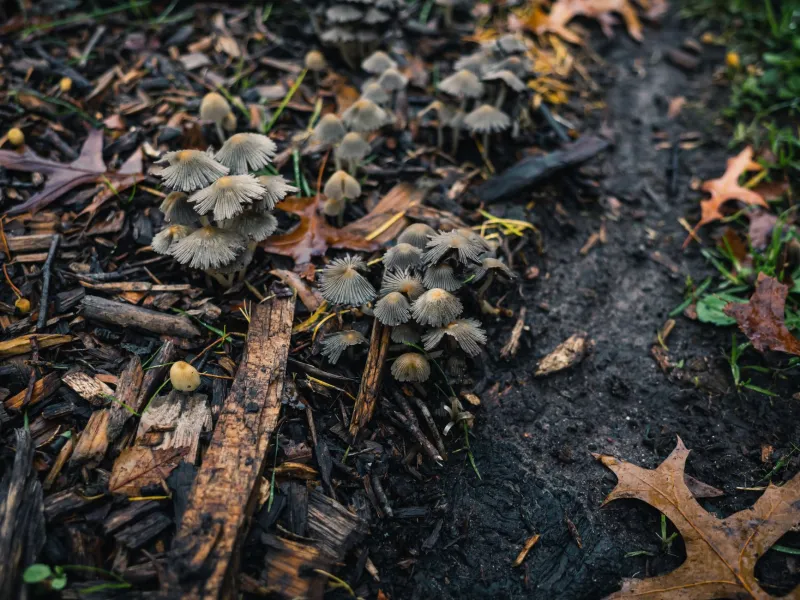
As tissue breaks down and dries, a second wave of decomposers moves in. Dermestid beetles, hide beetles, and various moth larvae specialize in the tougher materials that earlier arrivals leave behind: dried skin, fur, and ligament. Simultaneously, microbial communities — principally bacteria and fungi — are conducting the deeper biochemical work, secreting enzymes that dissolve complex organic compounds into simpler molecules that plant roots can absorb.
Millipedes and isopods (commonly known as pill bugs or roly-polies) operate throughout this continuum. They are shredders by trade, mechanically fragmenting leaf litter and woody debris into smaller particles that exponentially increase the surface area available to microbial decomposers. A single square meter of healthy forest floor at EC Wildlife Refuge may support thousands of these organisms, collectively processing enormous volumes of organic material each season.
The Chemistry of Renewal
What decomposers are ultimately accomplishing is the release of locked nutrients — nitrogen, phosphorus, potassium, calcium — from dead organic matter back into bioavailable forms. This process, broadly termed nutrient cycling, is the mechanism by which ecosystems avoid running out of the chemical building blocks that life requires.
Nitrogen cycling is particularly instructive. When an animal dies, the proteins in its body contain nitrogen in organic form, inaccessible to most plants. Bacteria in the decomposer community break those proteins down through a process called ammonification, converting organic nitrogen into ammonium. A subsequent community of nitrifying bacteria then converts ammonium into nitrates, the form most readily absorbed by plant roots. Without this microbial relay, the nitrogen locked inside a deer carcass would remain unavailable to the meadow grasses and understory shrubs that border the very spot where the animal fell.
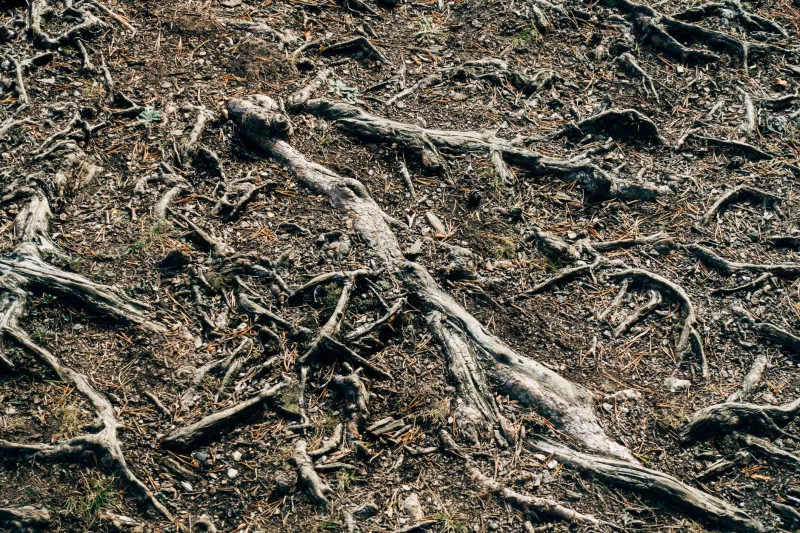
Fallen logs represent a slower but equally significant nutrient reservoir. A single large downed tree can take decades to fully decompose, serving throughout that period as habitat for cavity-nesting birds, salamanders, and small mammals — while simultaneously feeding the soil with a steady release of carbon and mineral nutrients. Refuge managers at EC Wildlife Refuge deliberately leave downed woody debris in place for this reason, resisting the impulse to "clean up" areas that are, in ecological terms, already doing exactly what they should.
When Decomposition Breaks Down
Like any biological community, decomposer networks are sensitive to disruption. Soil compaction from foot traffic or vehicle use collapses the pore structure that supports microbial life and reduces oxygen availability, slowing aerobic decomposition significantly. Pesticide application — even in areas adjacent to the refuge — can devastate beetle populations and disrupt the insect succession that drives early-stage breakdown.
Climate variability adds another layer of complexity. Decomposition rates are tightly linked to temperature and moisture. Extended droughts slow microbial activity and reduce the populations of moisture-dependent shredders like millipedes and earthworms. Conversely, flooding can shift soil communities toward anaerobic decomposers, which process organic matter more slowly and sometimes produce methane as a byproduct — a concern with broader implications for atmospheric carbon dynamics.
Invasive species present a particularly pressing challenge. The introduction of non-native earthworm species across much of the northern United States has altered decomposition dynamics in ways that native forest communities were not adapted to manage. These earthworms consume leaf litter faster than native decomposer communities replace it, stripping the forest floor of the organic layer that native wildflowers, tree seedlings, and ground-nesting birds depend upon. EC Wildlife Refuge monitors invasive earthworm presence as part of its broader soil health assessment program.
Connecting Decomposers to the Larger Picture
It would be a mistake to regard decomposer communities as separate from the charismatic wildlife that draws visitors to EC Wildlife Refuge each season. The connection is direct and consequential.
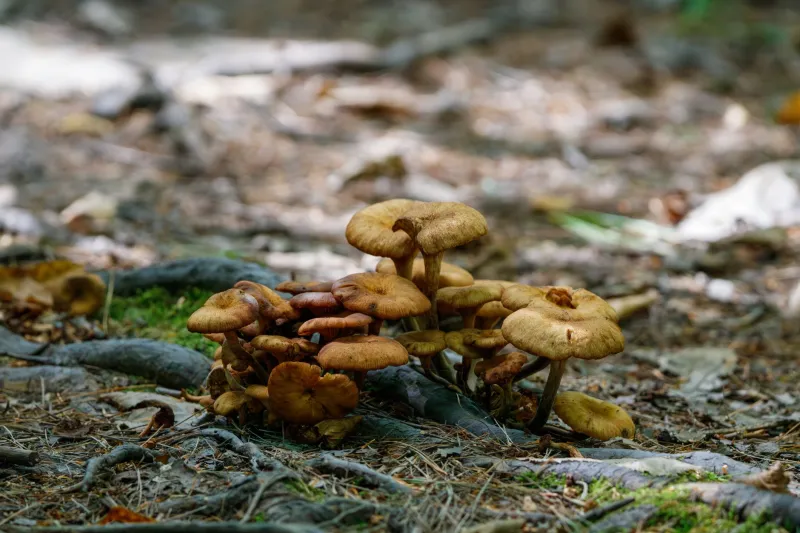
The insects that decompose organic matter are themselves prey for songbirds, amphibians, and small mammals. The enriched soil that decomposers produce supports the native plant communities that provide cover and forage for deer, wild turkey, and migratory species. The fungi that thread through decaying wood form mycorrhizal partnerships with living trees, extending the root systems of the forest and improving drought resistance across wide areas. Decomposers are not a footnote to the ecological story — they are the substrate upon which the entire story is written.
Refuge staff have incorporated this understanding into visitor programming, including guided walks that focus specifically on the forest floor and the organisms at work within fallen logs and leaf litter. These experiences consistently surprise participants who arrive expecting to look up at birds and leave with a new habit of looking down.
Stewardship From the Ground Up
Protecting decomposer communities requires a different kind of conservation thinking — one that is less focused on individual species and more attentive to the conditions that allow biological communities to function. Maintaining soil moisture through native vegetation cover, limiting ground disturbance in sensitive areas, retaining woody debris, and reducing pesticide inputs in the surrounding landscape all contribute to the health of the organisms working beneath our feet.
At EC Wildlife Refuge, the commitment to ecosystem integrity extends to these invisible architects. Their work is unglamorous by conventional standards. There are no field guides dedicated to them, no donation campaigns featuring their portraits. But every acre of productive habitat at the refuge, every thriving wildflower meadow and healthy riparian corridor, reflects the cumulative labor of organisms that most visitors will never see.
Death, at EC Wildlife Refuge, is not an ending. It is the beginning of the next cycle — and the decomposers are already at work.