Rooted in Relationship: How Mycorrhizal Fungi Shape the Feeding, Movement, and Survival of Wildlife at EC Wildlife Refuge
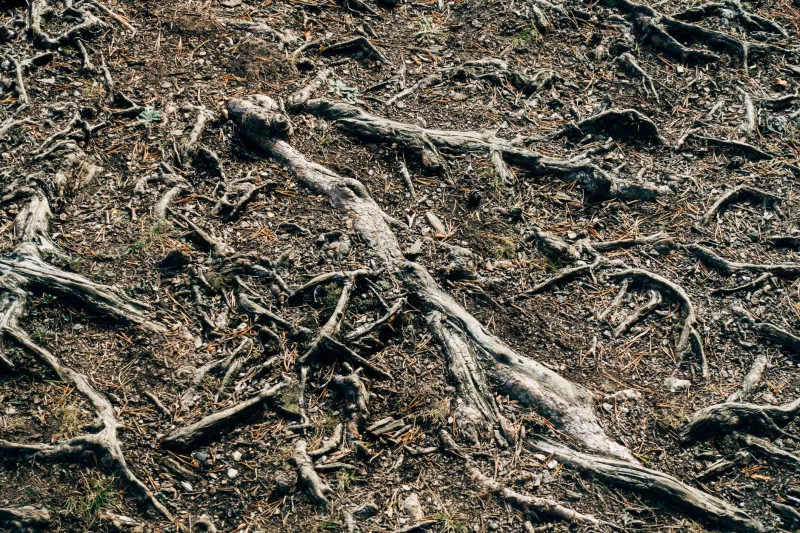
Most visitors to EC Wildlife Refuge arrive with their eyes trained upward — scanning the canopy for warblers, watching the meadow edges for deer, following the arc of a red-tailed hawk across an open sky. It is a natural instinct. The visible world of wildlife is compelling, immediate, and endlessly rewarding. But some of the most consequential ecological relationships at the refuge unfold in a place most visitors will never see: the narrow zone just below the soil surface, where plant roots and fungal threads negotiate one of the oldest partnerships in the history of life on Earth.
Mycorrhizal fungi — the term derives from the Greek words for fungus and root — colonize the root systems of the vast majority of terrestrial plant species. In exchange for carbohydrates produced through photosynthesis, these fungi dramatically extend a plant's capacity to absorb water and nutrients, particularly phosphorus and nitrogen. The arrangement is ancient, predating the emergence of most modern plant families by hundreds of millions of years. What is less widely appreciated, however, is the degree to which this underground exchange directly shapes the behavior, diet, and survival of the animals living above it.
A Nutrient Chain That Begins Underground
The connection between mycorrhizal health and wildlife welfare is not abstract. It operates through a specific and traceable chain of cause and effect.
Plants that maintain robust fungal partnerships tend to produce foliage, seeds, and fruit with higher concentrations of key nutrients. Research across multiple forest ecosystems in North America has demonstrated that mycorrhizally supported plants allocate more resources to secondary compounds — the chemical signatures that influence palatability, toxicity, and nutritional value. For herbivores navigating the refuge's landscape, this matters enormously. White-tailed deer, wild turkey, and a range of small mammals do not browse randomly. They make highly selective choices based on the chemical profiles of the plants available to them, and those profiles are, in significant part, a product of fungal activity underground.
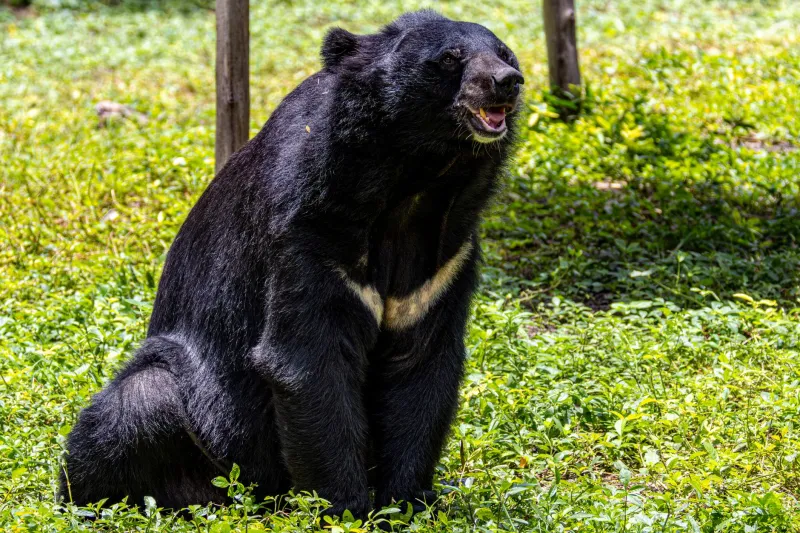
At EC Wildlife Refuge, this relationship plays out across a mosaic of habitat types. In the upland oak woodlands, ectomycorrhizal fungi support the mast-producing trees — oaks, hickories, and beeches — whose acorn and nut crops drive one of the refuge's most important annual wildlife events. When fungal communities in these stands are robust, mast production tends to be more consistent. When they are stressed or diminished, the effects cascade upward: fewer acorns mean leaner winters for deer and bear, reduced caching activity by gray squirrels, and lower overwinter survival rates for species that depend on buried seed stores.
The Fungal Influence on Animal Movement
The relationship between mycorrhizal networks and animal behavior extends beyond diet. There is growing scientific evidence that the spatial distribution of healthy fungal communities influences where animals choose to forage, rest, and establish territories.
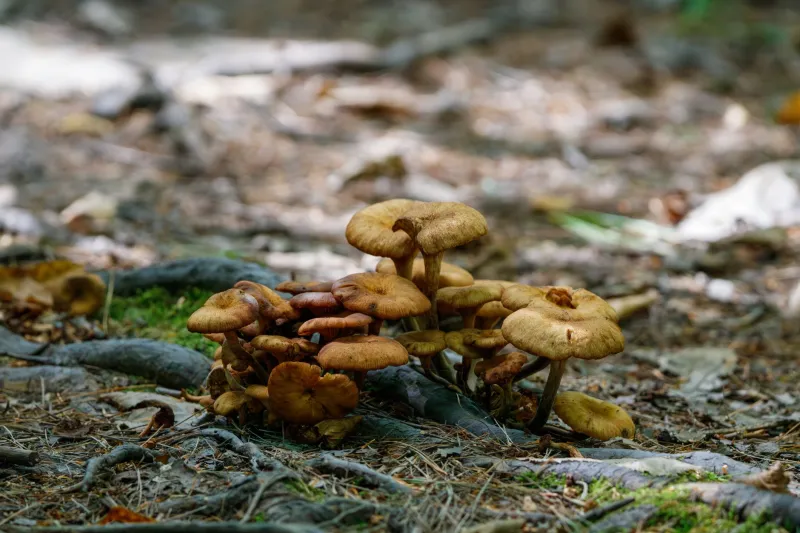
Many species of wildlife at the refuge — including several truffle-associated small mammals — actively seek out the fruiting bodies of mycorrhizal fungi as a direct food source. Eastern gray squirrels, white-footed mice, and certain vole species consume hypogeous fungi (those that fruit below ground) with notable regularity, particularly during late summer and autumn when other food sources are less abundant. In doing so, these animals become inadvertent dispersal agents, carrying fungal spores through their digestive systems and depositing them across the landscape. The movement patterns of these animals, therefore, are shaped in part by the distribution of fungi — and the distribution of fungi is, in turn, shaped by the movement of animals. It is a feedback loop with genuine ecological weight.
The implications for refuge management are significant. Areas where soil disturbance has fragmented mycorrhizal networks may see reduced use by small mammals, which in turn affects the predators — owls, foxes, and mink among them — that depend on those populations for prey.
When the Partnership Breaks Down
Mycorrhizal networks are resilient, but they are not invulnerable. Several land management practices common across the broader landscape pose documented threats to fungal communities, and their effects do not stop at the refuge boundary.
Soil compaction from foot traffic, vehicle use, and development reduces the oxygen availability that mycorrhizal fungi require. The application of phosphorus-heavy fertilizers — common in adjacent agricultural and residential areas — suppresses fungal colonization by signaling to host plants that external nutrient acquisition is unnecessary. Broad-spectrum fungicides, used widely in lawn care and agriculture, eliminate non-target fungal species with little discrimination. And the introduction of invasive plant species, several of which have established footholds in disturbed areas near the refuge, can restructure the mycorrhizal community in ways that favor certain fungal generalists while excluding the specialized partnerships that native plants depend upon.
When these disruptions accumulate, the effects on wildlife are rarely dramatic or sudden. They tend to be gradual, cumulative, and easy to misattribute. A decline in mast production gets blamed on weather. A contraction in small mammal populations is read as a natural fluctuation. A shift in deer browsing patterns goes unanalyzed. The fungal dimension of these changes frequently goes unexamined, not because it is unimportant, but because it is invisible.
Conservation Implications for the Refuge
Recognizing mycorrhizal health as a wildlife conservation priority requires a meaningful shift in how we think about habitat management. At EC Wildlife Refuge, this understanding is informing several ongoing efforts.
Restoration plantings now prioritize native species with well-documented mycorrhizal associations, and site preparation methods are being evaluated for their impact on existing fungal communities. In areas where invasive species removal has been completed, managers are monitoring the recovery of both plant communities and their underground partners, recognizing that the two cannot be separated. Visitor trail routing takes soil compaction into account, particularly in areas identified as supporting high fungal diversity.
There is also a role for the broader community. Homeowners and landowners adjacent to the refuge can contribute to mycorrhizal health by reducing synthetic fertilizer use, avoiding soil-disturbing landscaping practices in wooded areas, and supporting the spread of native plant species that maintain diverse fungal partnerships. These are not dramatic interventions, but at the landscape scale, they matter.
Seeing the Refuge Differently
Ecology has a persistent habit of revealing that the most important relationships are the ones least easily observed. The mycorrhizal partnerships threading through EC Wildlife Refuge's soil are not visible from the trail, cannot be heard at dawn, and will never appear in a field guide. Yet they are, in a very real sense, the infrastructure upon which much of the refuge's visible wildlife depends.
The next time you watch a deer move through the oaks at dusk, or hear the rustle of a small mammal in the leaf litter, consider what lies beneath the surface of that moment. The food that animal is seeking, the path it is choosing, and the season it may or may not survive are all connected, through a chain of relationships both ancient and intricate, to the health of the soil and the fungi living within it. At EC Wildlife Refuge, learning to see those connections is part of what it means to truly understand the wild.