Chemical Conversations: How Animals Read the World Through Scent — and Why We're Jamming the Signal
The forest at EC Wildlife Refuge looks, to the human eye, like a place of stillness. Leaf litter settles. Branches hold their positions. A stream moves without urgency. But beneath that apparent calm, an elaborate chemical conversation is unfolding — one that has been refined over hundreds of millions of years and that governs nearly every consequential decision made by the species living here.
Olfaction, the biological capacity to detect and interpret airborne and contact chemical compounds, is arguably the most ancient and sophisticated sensory system in the animal kingdom. While humans have long privileged vision as the primary window onto the world, most wildlife species experience their environment through a fundamentally different lens — one built from molecules rather than light. Understanding how that system works, and how it is being degraded by human activity, is among the more urgent and underappreciated challenges in contemporary conservation science.
A Language Written in Molecules
The mechanics of animal olfaction vary considerably across species, but the underlying principle is consistent: chemical compounds, whether airborne or deposited on surfaces, bind to specialized receptors and generate neurological responses that carry meaningful information. In many mammals, this system operates at a sensitivity that defies easy comprehension.
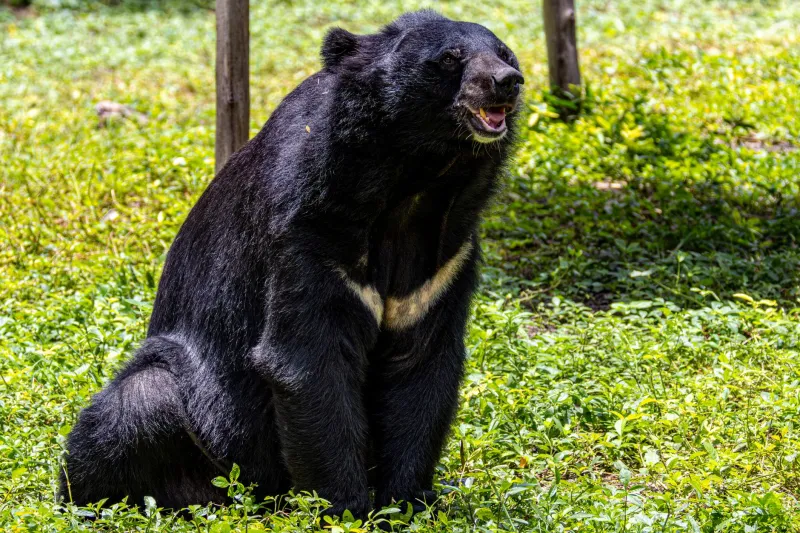
Black bears, which range throughout the refuge's forested uplands, possess an olfactory system estimated to be roughly 2,100 times more acute than a human's. Where a person might detect the general scent of food at close range, a bear can identify the specific contents of a sealed container from considerable distance, track a scent trail that is days old, and distinguish between individual animals based on subtle chemical signatures. This is not a peripheral ability — it is the organizing framework through which bears assess risk, locate mates, identify territorial competitors, and find nutritional resources across large, complex landscapes.
White-tailed deer rely on scent glands distributed across their bodies to communicate reproductive status, signal alarm, and mark travel routes. Coyotes use urine and glandular secretions to establish territorial boundaries that other individuals read with precision. Even species not commonly associated with chemical communication — including several migratory songbird species documented at EC Wildlife Refuge — demonstrate measurable responses to olfactory cues during navigation and habitat selection.
Navigation Beyond the Compass
Perhaps the most remarkable dimension of animal olfaction is its role in long-distance navigation. For decades, the mechanisms underlying migratory bird navigation were attributed almost exclusively to magnetic field detection and star orientation. More recent research has complicated that picture considerably.
Evidence now suggests that certain migratory species, including members of the thrush and warbler families represented at the refuge, incorporate olfactory information into their navigational toolkit. Atmospheric scent gradients — patterns of chemical compounds carried on prevailing winds from distant geographic features — may function as a kind of large-scale map, allowing birds to orient themselves relative to landscape features they cannot directly observe. This finding reframes olfaction not merely as a close-range sensory tool but as a mechanism capable of operating across continental scales.
For aquatic species, the implications are equally profound. Anadromous fish, including certain trout populations in the refuge's watershed, are well documented to use olfactory imprinting to identify the specific chemical signature of their natal streams, guiding their return from the ocean after years of absence. The precision of this system — capable of distinguishing a home stream from thousands of alternatives — represents one of the more extraordinary feats in vertebrate biology.
When Human Chemistry Overwhelms Natural Signals
Against this backdrop, the scale of human chemical introduction into natural environments begins to look less like a nuisance and more like a fundamental disruption. The problem operates on several distinct levels.
Air pollution, including particulate matter and volatile organic compounds generated by vehicle traffic, industrial operations, and agricultural activity, physically degrades the olfactory environment. Studies conducted in urban and semi-urban ecosystems have found that pollutant exposure can damage olfactory receptor tissue in mammals, reducing sensory acuity in ways that persist well beyond the period of exposure. Animals living in or near developed areas — a category that increasingly includes species at the edges of refuges like this one — may be operating with a meaningfully compromised sensory system.
Fragrance compounds present a more insidious challenge. Synthetic musks, terpene derivatives, and other aromatic chemicals used in personal care products, laundry detergents, and household cleaners enter aquatic systems through wastewater discharge and surface runoff. Research has demonstrated that some of these compounds interfere with the pheromone detection systems of fish, disrupting spawning behavior and reducing reproductive success. Others may mask or mimic the alarm chemicals that prey species use to communicate predator presence — a form of chemical misinformation with potentially cascading effects on predator-prey dynamics.
Road salt, widely applied across the northeastern and midwestern United States during winter months, alters the ionic composition of soil and water in ways that affect how chemical signals are deposited, dispersed, and detected. Herbicides applied along road corridors and agricultural margins can eliminate the plant species whose volatile emissions serve as navigational landmarks for insects and other small fauna.
Implications for Adaptation in a Changing World
The intersection of olfactory disruption and climate change introduces additional complexity. As temperature and precipitation patterns shift, the atmospheric conditions governing how scent compounds disperse and persist are also changing. Warmer temperatures generally accelerate the volatilization of chemical compounds, potentially altering the spatial range and duration of scent signals in ways that existing behavioral adaptations are not equipped to address.
For species already navigating habitat fragmentation, altered phenology, and resource scarcity, the degradation of a primary sensory system represents a compounding stressor. An animal that cannot accurately assess mate quality through chemical cues may make suboptimal reproductive choices. One that cannot reliably detect predator scent may take risks that a fully functional olfactory system would preclude. The cumulative effect across populations is difficult to model with precision, but the directional concern is clear.
What Refuge Science Tells Us
At EC Wildlife Refuge, ongoing monitoring efforts include attention to the chemical environment as a component of overall ecosystem health. Efforts to reduce impervious surface runoff, maintain vegetative buffers along waterways, and minimize the use of synthetic compounds in refuge management operations reflect an understanding that sensory ecology is not separate from habitat ecology — it is embedded within it.
Visitors to the refuge can contribute meaningfully by following scent-awareness guidelines during wildlife observation: avoiding heavily fragranced personal products before entering the refuge, remaining on designated trails to minimize chemical disturbance of sensitive areas, and reporting unusual animal behavior that may indicate sensory disorientation.
The broader lesson that olfactory science offers is one of humility. The natural world communicates through channels that human perception is poorly equipped to detect, and that human industry has been disrupting without full awareness of the consequences. Protecting the integrity of those channels — the chemical conversations that govern survival, reproduction, and navigation — is as legitimate a conservation priority as protecting physical habitat. At EC Wildlife Refuge, that commitment begins with taking the invisible seriously.