Drowned Out: How the Rising Tide of Human Noise Is Silencing Wildlife at EC Wildlife Refuge
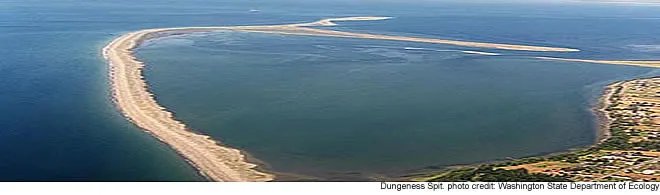
Photo: U.S. Fish & Wildlife Service - Pacific Region's, CC BY 2.0, via Wikimedia Commons
Long before the first visitor arrives at EC Wildlife Refuge each morning, the landscape is already alive with sound. Frogs call from the wetland margins. Songbirds negotiate territory from the canopy. A white-tailed deer pauses in the meadow, ears rotating like satellite dishes, parsing a world it navigates almost entirely through acoustic cues. For these animals, sound is not ambient background. It is the medium through which they find mates, raise young, avoid predators, and maintain the social bonds that structure their lives.
Now consider what happens when that medium is corrupted.
Anthropogenic noise — sound generated by human activity — has become one of the most pervasive and least discussed forms of environmental pollution affecting wildlife in the United States. Unlike chemical contaminants, it leaves no visible residue. Unlike habitat loss, it does not show up in satellite imagery. But its effects on animal behavior, reproduction, and survival are increasingly well-documented, and at EC Wildlife Refuge, researchers and land managers are confronting the reality that noise is quietly rewriting the rules of life for the species that call this landscape home.
The Acoustic Ecology of a Refuge Under Pressure
EC Wildlife Refuge does not exist in isolation. It sits within a broader landscape that includes roads, residential development, and recreational infrastructure — all of which generate persistent sound energy that does not stop at the refuge boundary. Traffic noise from nearby corridors introduces a low-frequency roar that can penetrate deep into forested interiors. Seasonal surges in visitor activity bring voices, equipment, and motorized vehicles. Construction from adjacent development projects sends irregular bursts of mechanical noise across habitats that would otherwise experience near-silence during critical biological windows.
The result is an acoustic environment that is measurably different from the one these ecosystems evolved within. Studies measuring ambient noise levels in comparable refuges across the country have found that human-generated sound now exceeds natural background noise in a significant portion of protected land — often by margins large enough to functionally impair the communication systems of resident species.
When the Signal Gets Lost
The biological consequences of this acoustic interference are not hypothetical. They have been documented across taxonomic groups with remarkable consistency.
For songbirds, the effects are particularly well-studied. Many species rely on precise frequency ranges to transmit territorial and mating calls. When traffic noise floods those same frequency bands, males must either raise the pitch of their calls — a physiologically costly adjustment that alters the signal's meaning to potential mates — or risk having their vocalizations masked entirely. Research has shown that some urban-adjacent bird populations have already shifted their call frequencies over multiple generations, a form of rapid behavioral adaptation that nonetheless comes with trade-offs in signal fidelity and mate attraction.
At EC Wildlife Refuge, staff ornithologists have noted behavioral changes in several cavity-nesting species during periods of elevated ambient noise near the refuge's eastern boundary, where road traffic is heaviest. Nest site selection appears to shift away from noisier areas, concentrating breeding activity in ways that may increase competition for limited habitat in quieter zones.
Amphibians face an equally serious challenge. Frogs and toads depend on acoustic communication for reproduction with a directness that leaves little margin for error — a male whose call cannot be detected by a female in a noisy wetland simply does not reproduce. Studies of gray tree frogs and spring peepers in noise-affected habitats have found measurable reductions in calling activity and altered call timing, as individuals attempt to vocalize during brief lulls in ambient noise rather than during the biologically optimal windows their physiology is tuned for.
For mammals, the disruption operates through different but equally consequential mechanisms. White-tailed deer and other ungulates use auditory cues as a primary predator-detection system. Chronic noise effectively reduces the range at which they can detect an approaching threat, compressing the buffer zone between perceived safety and actual danger. This forces deer into a state of prolonged physiological stress — elevated cortisol, reduced foraging time, heightened vigilance — that carries measurable costs to body condition and reproductive success over time. Parent-offspring communication is also affected: fawn distress calls and doe responses occur within frequency ranges vulnerable to masking by low-frequency anthropogenic noise, potentially delaying or disrupting the bonding behaviors critical during the first weeks of a fawn's life.
The Compounding Effect on Predator-Prey Dynamics
Noise pollution does not affect all species equally, and that asymmetry creates cascading effects throughout the food web. Predators that rely on acoustic hunting — owls, in particular — experience significant declines in foraging efficiency in noisy environments. A barred owl hunting along a woodland edge near a busy road must contend with a soundscape that masks the subtle rustling of prey beneath leaf litter. Studies have documented reduced hunting success rates and contracted home ranges in owl populations adjacent to high-noise corridors, with downstream effects on small mammal populations that would otherwise be regulated by predation pressure.
Meanwhile, prey species that have adapted to elevated noise by becoming more vigilant may paradoxically become easier targets for visual predators — the increased time spent scanning for threats reduces time available for feeding and cover-seeking behavior that provides protection against hawks and other diurnal hunters.
What the Refuge Is Doing About It
EC Wildlife Refuge has begun implementing a series of acoustic management strategies designed to identify and protect the habitat areas where natural soundscapes remain most intact, while reducing noise intrusion in the zones where it is most ecologically damaging.
The first component is acoustic monitoring. A network of passive recording units has been deployed across the refuge to generate baseline data on ambient noise levels by habitat type, season, and time of day. This data is being used to map what refuge staff refer to as "acoustic refugia" — areas where natural sound environments remain relatively undisturbed and where noise-sensitive species concentrate their critical behaviors.
The second component involves visitor management. Designated quiet zones have been established around key breeding habitats during peak reproductive seasons, with trail rerouting and signage guiding visitors away from areas where elevated human presence would cause the greatest acoustic disruption. Staff are also working with volunteer groups to conduct guided acoustic awareness programming — educational experiences designed to help visitors understand what they are hearing in the natural soundscape and why protecting it matters.
The third and most experimental component involves coordination with adjacent landowners and transportation authorities to explore noise mitigation infrastructure — sound barriers, reduced speed limits during sensitive biological periods, and buffer plantings that can attenuate road noise before it reaches the refuge interior.
Listening as a Conservation Act
There is something instructive in the fact that one of the most significant threats to wildlife at EC Wildlife Refuge is also one of the most difficult to perceive with the unaided human ear. We are not well-calibrated to notice the difference between a soundscape at 45 decibels and one at 55 — but for a frog attempting to locate a mate, or an owl hunting by sound alone, that difference can be the margin between reproductive success and failure.
Conservation at EC Wildlife Refuge has always required expanding the boundaries of what we pay attention to. Protecting this landscape means protecting not just its visible features — the wetlands, the forest stands, the open meadows — but also the acoustic conditions that allow the life within those features to function. Sound, it turns out, is as much a part of the ecosystem as the soil beneath it.