Dam Good Science: How Beavers Rebuild Entire Watersheds at EC Wildlife Refuge
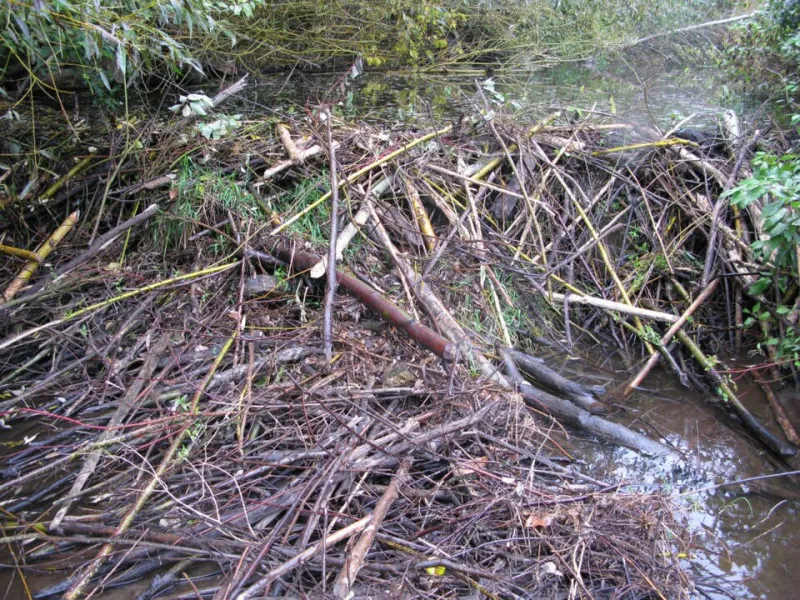
Photo: ConservationKM, CC BY-SA 4.0, via Wikimedia Commons
In the catalog of wildlife that shapes the natural world, few species punch above their weight quite like the North American beaver (Castor canadensis). Without permits, planning committees, or heavy machinery, beavers alter stream channels, raise water tables, and manufacture wetland habitat at a scale that would require millions of dollars to replicate through conventional restoration engineering. At EC Wildlife Refuge, the evidence of their work is written into the landscape itself — in the still ponds behind stick-and-mud dams, in the dense stands of willow and alder reclaiming formerly dry stream banks, and in the surprising diversity of life that follows wherever these animals settle.
Yet for much of the twentieth century, beavers were trapped to near-extinction across vast portions of their North American range. The consequences of that absence — degraded streams, diminished groundwater reserves, and impoverished wetland ecosystems — are still being felt. The recovery of beaver populations at and around EC Wildlife Refuge offers an instructive window into what happens when a keystone engineer is allowed to return to the landscape.
Engineering at the Scale of a Watershed
To understand why beavers matter so profoundly, it helps to think about what a stream looks like in their absence. Without intervention, water moves quickly through a channel — cutting deeper, carrying away sediment, and leaving surrounding land comparatively dry. Beaver dams interrupt that momentum. By impounding water behind structures built from branches, mud, and debris, beavers convert fast-moving linear streams into complex networks of ponds, side channels, and saturated floodplains.
The hydrological consequences are far-reaching. Water held behind a dam does not simply sit still; it percolates downward, recharging the groundwater aquifers that sustain vegetation and stream flow long after surface water recedes. In drought-prone regions, this recharge function is especially significant. Studies conducted across the American West have demonstrated that watersheds with active beaver populations retain measurably more water during dry seasons than comparable streams without them — a finding with direct relevance to the refuge's long-term ecological resilience.
At EC Wildlife Refuge, staff have documented several active dam complexes along interior stream corridors. In each case, the upstream area behind the dam has transformed from a relatively narrow, incised channel into a broadened wetland zone with standing water, emergent vegetation, and the characteristic muddy, nutrient-rich substrate that defines productive freshwater habitat.
Water Quality and the Sediment Question
Beyond hydrology, beaver ponds perform a quiet but critical water-quality function. As water slows behind a dam, suspended particles — sediment, organic material, and in some cases agricultural runoff — settle to the pond bottom rather than continuing downstream. The result is water that emerges cleaner and clearer from the downstream face of a beaver complex than it was when it entered.
This natural filtration process has measurable benefits for aquatic life. Excess sediment is one of the leading causes of fish habitat degradation in North American streams, smothering the gravel beds where species like brook trout deposit their eggs. Where beaver activity reduces sediment loads and stabilizes stream banks with wetland vegetation, spawning habitat quality improves substantially. Refuge monitoring data have reflected this pattern, with invertebrate diversity — a reliable proxy for overall stream health — trending upward in reaches downstream of established beaver ponds compared to unimpounded sections of the same waterways.
A Habitat Factory for Dozens of Species
Perhaps the most visible consequence of beaver engineering is the sheer proliferation of life that follows their activity. The pond and wetland complex that forms behind a dam does not simply benefit the beavers themselves; it becomes habitat infrastructure for an impressive roster of other species.
Amphibians, including several frog and salamander species documented at EC Wildlife Refuge, depend on slow-moving, vegetated water for breeding. Wood ducks and hooded mergansers nest in the tree cavities that emerge as water-killed standing timber — a structural feature unique to beaver-flooded zones — provides nesting platforms otherwise scarce in managed landscapes. Muskrats, river otters, mink, and great blue herons are regular visitors to active beaver complexes on the refuge, each exploiting a different niche within the same engineered habitat.
Riparian vegetation also responds dramatically to elevated water tables. Willows, alders, and sedges colonize the saturated margins of beaver ponds, creating dense shrub corridors that support nesting songbirds, pollinators, and the small mammals that form the base of the refuge's food web. In this sense, a single beaver family can, over the course of several seasons, catalyze a cascade of biodiversity that would take decades and significant financial investment to achieve through direct planting and habitat management alone.
The Economics of Letting Beavers Work
Conservation resources are finite, and prioritizing interventions that deliver broad ecosystem returns is a practical necessity. Beaver-assisted restoration — the deliberate protection and, where appropriate, reintroduction of beaver populations to degraded watersheds — has emerged as one of the most cost-effective tools available to land managers.
A single beaver dam can provide the equivalent of tens of thousands of dollars in water retention, sediment capture, and habitat creation services annually. Across a watershed with multiple dam complexes, those figures compound significantly. For a refuge operating within the constraints of limited budgets and vast acreage, the calculus is straightforward: protecting existing beaver populations and creating conditions that allow them to expand their range represents exceptional conservation value per dollar invested.
EC Wildlife Refuge's current management approach reflects this understanding. Staff work to minimize conflicts between beaver activity and refuge infrastructure — addressing the occasional issue of a dam flooding a trail or road through non-lethal flow-management devices rather than dam removal — while allowing beaver engineering to proceed in areas where it contributes to broader restoration goals. This coexistence model has grown increasingly common among wildlife agencies across the United States as the ecological evidence for beavers' value has mounted.
Observing Beaver Activity on Your Visit
For visitors to EC Wildlife Refuge, beaver activity offers some of the most tangible evidence of ecosystem processes at work. The gnawed stumps and felled saplings along stream margins, the carefully plastered mud-and-stick dams, and the wide, glassy ponds that form behind them are all accessible signs of engineering that has been reshaping North American landscapes for millions of years.
Dawn and dusk are the most reliable times to observe beavers directly, as they are predominantly crepuscular. A patient visitor positioned quietly near an active pond may witness the animals moving construction material, patrolling their territory, or simply feeding on the bark and cambium of freshly cut branches. Even without a direct sighting, the habitat complexity of an active beaver complex rewards careful observation — the diversity of birds, insects, and amphibians attracted to these engineered wetlands is reliably higher than in adjacent stream reaches.
The work of beavers at EC Wildlife Refuge is a reminder that conservation does not always require human intervention at the center of the story. Sometimes, the most effective strategy is simply to protect the species that already know how to do the work — and then step back and observe what they build.