The Quiet Collapse: What Vanishing Pollinators Reveal About Ecosystem Health at EC Wildlife Refuge
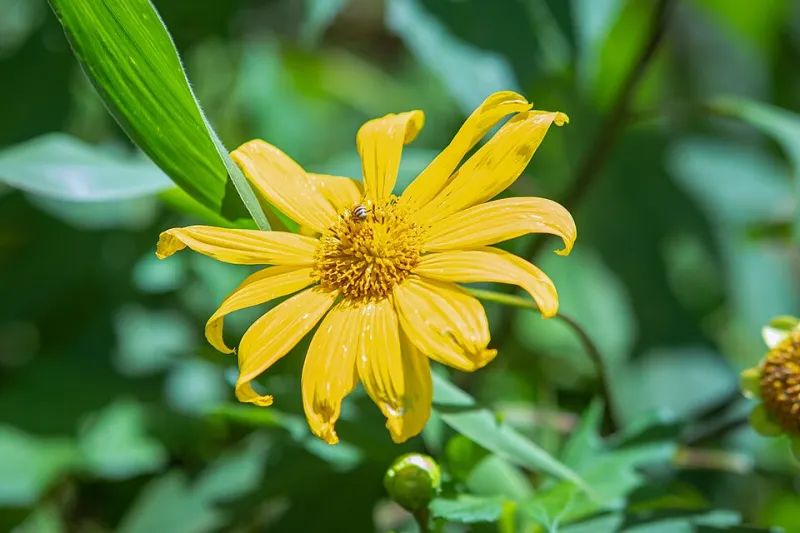
Photo: Sidoine Mbogni, CC BY-SA 4.0, via Wikimedia Commons
On a warm morning in late July, a refuge ecologist kneels beside a stand of wild bergamot near the eastern meadow corridor at EC Wildlife Refuge. She is counting bees — a task that, a decade ago, would have required little patience. Today, she waits considerably longer between sightings. The bergamot blooms are full and fragrant. The bees, however, are conspicuously absent.
This is not an isolated observation. Across the refuge's managed meadows, restored prairie sections, and native plant gardens, staff scientists have been tracking a gradual but unmistakable thinning of pollinator activity. What was once a reliable hum of biological productivity has, in some areas, softened to near silence.
A Crisis Hidden in Plain Sight
Pollinators — a category that includes native bees, butterflies, moths, beetles, flies, and even some species of wasps and hummingbirds — are responsible for facilitating the reproduction of roughly 75 percent of flowering plant species worldwide. In the United States alone, they support an estimated $15 billion in annual agricultural value. But their importance to natural ecosystems extends well beyond crop production.
Within a wildlife refuge, pollinators function as foundational links in the food web. The seeds and fruits produced through pollination feed birds, small mammals, and reptiles. The insects themselves serve as critical protein sources for nestling songbirds, amphibians, and bats. When pollinator populations contract, the effects cascade upward through the entire system in ways that are not always immediately visible but are, over time, profoundly destabilizing.
North American data paints a grim picture. The rusty patched bumblebee, once common across the eastern United States, has declined by approximately 87 percent since the 1990s and is now listed as federally endangered. Monarch butterfly populations have dropped by more than 80 percent over the past two decades. Among native bee species more broadly, researchers estimate that nearly one in four is at elevated risk of extinction.
What Refuge Scientists Are Observing
At EC Wildlife Refuge, long-term monitoring efforts have revealed several concerning patterns. Seasonal pollinator surveys, conducted annually since the refuge's early conservation programs were established, show measurable reductions in both species diversity and overall abundance across multiple pollinator guilds.
Perhaps most telling is the shift in phenological timing — the relationship between when plants bloom and when pollinators emerge. As seasonal temperatures fluctuate with increasing unpredictability, some plant species are flowering earlier or later than historical norms. Pollinators, which evolved over millennia to synchronize their activity with specific bloom windows, often cannot adjust quickly enough. The result is a mismatch: flowers open without their pollinators, and pollinators emerge to find their preferred forage already past peak.
Refuge staff have also documented changes in habitat connectivity. As land use around the refuge has intensified — with more impervious surfaces, ornamental landscaping, and agricultural monocultures in the surrounding region — the refuge's managed areas function increasingly as isolated islands rather than as part of a continuous, functional landscape. Pollinators that require diverse foraging across a broad territory are particularly vulnerable to this fragmentation.
Pesticide drift from adjacent properties presents an additional pressure. Even when insecticides are not applied directly within refuge boundaries, airborne chemical exposure can impair bee navigation, reduce reproductive success, and weaken immune function in ways that compound other stressors.
Why Refuge Gardens Are Not Optional
It would be tempting to regard the refuge's native plant gardens and managed meadows as aesthetic enhancements — pleasant features that enrich the visitor experience without serving a deeper purpose. The science suggests otherwise.
These intentionally cultivated spaces represent some of the most productive pollinator habitat remaining in the region. A well-designed native plant garden, particularly one that sequences bloom times from early spring through late fall, can support dozens of native bee species, multiple butterfly species, and a range of other beneficial insects. The refuge's demonstration gardens, maintained with this principle in mind, have been documented hosting species that are rarely observed elsewhere in the county.
Beyond providing direct habitat, these gardens serve a connective function. They act as stepping stones within the broader landscape, offering pollinators safe foraging and nesting opportunities as they move between the refuge's core habitat areas and the surrounding region. In this sense, every square foot of intentionally managed native planting contributes to a network larger than itself.
Refuge ecologists emphasize that the composition of these plantings matters enormously. Native plant species, which co-evolved with local pollinator communities over thousands of years, provide nutritional profiles that many non-native ornamentals simply cannot replicate. A garden planted exclusively with cultivated varieties — even attractive ones — may offer pollen and nectar of insufficient quality or quantity to sustain native bee populations through their full reproductive cycle.
What You Can Do at Home
Conservation at scale begins with individual decisions made in individual yards. Refuge scientists consistently point to residential landscapes as one of the most underutilized opportunities for pollinator recovery, particularly in suburban and semi-rural communities adjacent to protected areas like EC Wildlife Refuge.
Several evidence-based practices can meaningfully improve the value of a home landscape for pollinators:
Plant for sequence, not just spectacle. Choose native species that bloom across the full growing season, from early ephemerals like Virginia bluebells and wild columbine through late-season asters and goldenrods. Pollinators require consistent forage from the moment they emerge in spring through their final foraging before winter dormancy.
Leave the ground alone — deliberately. Approximately 70 percent of native bee species nest in the soil. Bare or sparsely vegetated patches of undisturbed earth, particularly in sunny, south-facing locations, provide essential nesting substrate. Reducing mulch coverage in portions of your yard and avoiding soil compaction in garden beds can meaningfully increase nesting opportunities.
Reconsider your relationship with leaf litter. Many butterfly and moth species overwinter as eggs, pupae, or adults within fallen leaves. A managed but not obsessively tidy yard — one where leaves are allowed to remain in garden beds through winter — provides shelter that a raked and bagged landscape cannot.
Eliminate or strictly limit pesticide use. Even products marketed as safe for pollinators can carry risks when applied incorrectly or during active foraging periods. When pest management is genuinely necessary, prioritize targeted, low-toxicity interventions and apply them in the early morning or evening when pollinator activity is minimal.
Add a water source. Shallow dishes filled with clean water and pebbles or marbles — which give insects a landing surface — provide hydration that is often scarce in landscaped environments.
A Shared Responsibility
The decline of pollinators is not a problem that any single institution, however well-resourced, can reverse in isolation. EC Wildlife Refuge can manage its meadows with precision, sequence its plantings strategically, and monitor populations with scientific rigor — but the landscape surrounding the refuge will ultimately determine how effective those efforts can be.
This is where the connection between refuge science and community action becomes most direct. When homeowners, schools, faith communities, and local businesses make deliberate choices to support pollinators in their own spaces, they extend the reach of refuge conservation work far beyond the property boundary. They transform a fragmented landscape into a connected one.
The bees are still here. The butterflies have not entirely vanished. But the window for reversing current trends is not unlimited, and the decisions made in gardens and yards across this region in the coming years will shape what future visitors to EC Wildlife Refuge are able to observe and study.
The work of conservation, it turns out, is not confined to the refuge. It begins wherever you happen to be standing.