Out of Step with the Seasons: What Shifting Migration Clocks Mean for EC Wildlife Refuge
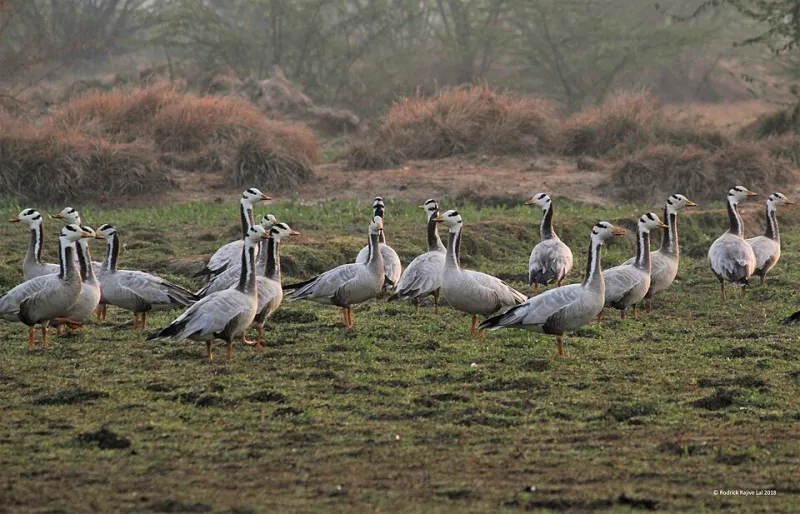
Photo: Rodrick rajive lal, CC BY-SA 4.0, via Wikimedia Commons
For generations, the arrival of certain species at EC Wildlife Refuge has served as a reliable calendar. Waterfowl descending onto the marshes in autumn, warblers threading through the canopy in late April, shorebirds pausing on mudflats during their southward journey in August—these events once unfolded with the dependability of a clock. Increasingly, however, that clock is running on a different schedule. Warming temperatures, altered precipitation patterns, and shifting vegetation cycles are rewriting the rules of migration in ways that refuge scientists are only beginning to fully measure.
What the Long-Term Data Is Telling Us
EC Wildlife Refuge has maintained systematic wildlife monitoring records for more than three decades. That longitudinal dataset has become an invaluable scientific resource, and its findings are striking. Over the past 25 years, the average first-arrival date for several neotropical songbird species has shifted nearly two weeks earlier compared to baseline records from the 1990s. Meanwhile, certain waterfowl populations that historically used the refuge as a critical stopover point are now documented passing through in reduced numbers—or, in some cases, not at all.
"What we're observing isn't random variation," explains one senior refuge biologist who has been tracking migration phenology at the site for over fifteen years. "There are consistent directional trends in the data. Species that were once highly predictable are becoming erratic, and that unpredictability creates real management challenges."
Temperature records collected at the refuge's weather stations corroborate what the wildlife data suggests. Mean spring temperatures have risen measurably, prompting earlier snowmelt, earlier insect emergence, and earlier plant flowering—environmental cues that many migratory species rely upon to time their journeys. The problem is that not all species are responding at the same rate.
The Mismatch Problem
Ecologists refer to it as phenological mismatch: the growing temporal gap between when a migratory animal arrives at a location and when the food resources it depends upon actually peak. For songbirds, this is particularly acute. Many long-distance migrants—those that winter in Central or South America—calibrate their departure from wintering grounds based on day length, a cue that does not change with warming temperatures. They arrive on a fixed schedule, only to find that the caterpillar abundance they evolved to exploit has already peaked and declined.
At EC Wildlife Refuge, this dynamic is visible in the productivity data for several insectivorous breeding species. Nest success rates and fledgling weights in certain warbler populations have declined in years when spring warming was most pronounced. The timing window during which abundant, easily captured prey coincides with peak chick-rearing demand has narrowed, placing additional stress on birds that arrive in already-depleted condition after a demanding migration.
The mismatch phenomenon extends beyond birds. Monarch butterflies, which pass through the refuge during their remarkable annual migration to Mexican overwintering sites, depend on milkweed availability during their northward journey in spring. Warming has accelerated milkweed senescence in some parts of their range, reducing the quality and abundance of forage during a period when females need to reproduce successfully. Refuge staff have documented year-to-year variation in monarch passage numbers that correlates with spring temperature anomalies—a finding consistent with population-level research conducted across the species' broader range.
Routes Redrawn
Beyond timing, the geography of migration itself appears to be shifting. Waterfowl surveys conducted in collaboration with regional partners suggest that some dabbling duck populations are shortening their migrations, opting to winter farther north than historical patterns would predict. Milder winters reduce the energetic imperative to travel south, meaning that refuges traditionally important as southern wintering grounds may see declining use while northern staging areas gain significance.
This redistribution of wildlife across the landscape has cascading effects. Refuges that experience reduced waterfowl visitation may see changes in nutrient cycling, since large concentrations of waterfowl historically deposited significant quantities of nutrients into wetland systems through waste and decomposition of carcasses. Aquatic invertebrate communities, submerged aquatic vegetation, and even the bacterial composition of sediments can all be influenced by the presence or absence of dense bird populations.
Conversely, areas experiencing increased use may face novel pressures—greater grazing intensity on wetland vegetation, elevated disturbance of nesting shorebirds, or accelerated transmission of avian disease among unusually dense aggregations of birds.
Adapting Refuge Management in Real Time
Faced with these realities, refuge managers at EC Wildlife Refuge are moving away from static management prescriptions toward adaptive frameworks that can respond to conditions as they evolve. Water level management in the refuge's impoundment system, for example, has traditionally followed a fixed seasonal schedule designed around historical wildlife use patterns. Staff are now experimenting with more flexible protocols that allow water levels to be adjusted in response to real-time observations of species presence and habitat condition.
Habitat restoration priorities are also being reconsidered through a climate lens. Plantings that favor native species with broad thermal tolerances and flexible phenologies are increasingly preferred over those with narrow ecological requirements. Connectivity between the refuge and surrounding natural lands is being emphasized as a management goal, recognizing that species facing shifting conditions need the ability to move and find suitable habitat as circumstances change.
Citizen science contributions are playing a growing role in this adaptive management effort. Volunteer observers submitting wildlife sightings through standardized platforms provide near-real-time data that supplements formal monitoring, helping staff detect early signals of unusual species occurrences or timing anomalies.
A Refuge in Transition
EC Wildlife Refuge was established to protect wildlife and the habitats that sustain it. That mission has never been more complex to fulfill. The ecosystems within the refuge's boundaries are not static—they are dynamic, interconnected systems responding to forces that originate far beyond any fence line or property boundary. Migration, by its very nature, links distant places into a single ecological story.
Understanding how that story is changing requires sustained investment in monitoring, research, and collaboration with partners across the flyways that connect this refuge to wintering grounds in the tropics and breeding grounds in the boreal north. It also requires a willingness to sit with uncertainty—to acknowledge that some of what is coming cannot be fully predicted and to build management systems resilient enough to respond to surprises.
The migrations will continue. The question is whether the refuge, and the broader landscape it is part of, can keep pace with the changes underway.