When the Sky Changes, So Does the Wild: How Atmospheric Shifts Are Rewriting Animal Behavior at EC Wildlife Refuge
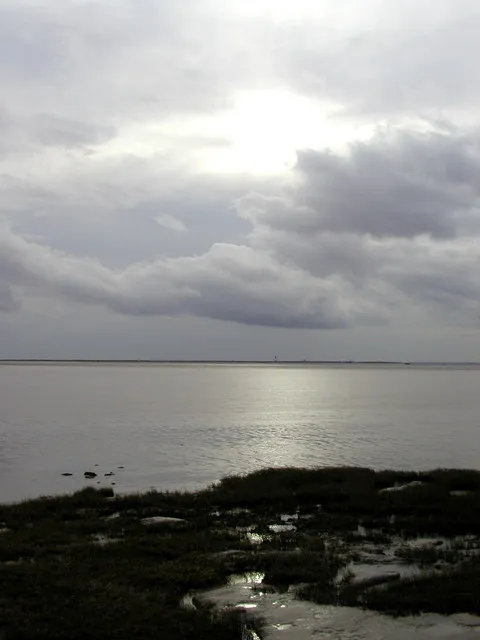
Photo: Andy Beecroft, CC BY-SA 2.0, via Wikimedia Commons
Long before a storm system appears on a radar screen, the animals at EC Wildlife Refuge already know it is coming. White-tailed deer move to lower elevations. Songbirds fall silent and seek dense cover. Frogs retreat beneath the mud at the edges of refuge wetlands. These are ancient responses, honed across millions of years of evolutionary pressure, and they remain among the most reliable indicators that atmospheric conditions are shifting.
But something has changed. The storms are arriving differently now—more intense, more unpredictable, and increasingly out of sync with the seasonal rhythms that wildlife depend upon. Across the refuge, researchers and field staff are documenting behavioral patterns that do not fit historical norms, and the implications extend far beyond individual species. When the atmosphere becomes unreliable, the ecological relationships built around it begin to fray.
The Barometric Signal: An Invisible Language Animals Have Always Spoken
Barometric pressure—the weight of the atmosphere pressing down on the earth's surface—functions as one of nature's most consistent advance-warning systems. A rapid drop in pressure signals an approaching low-pressure system, and many species have evolved acute physiological sensitivity to these changes. Fish alter their depth in the water column. Birds adjust their flight behavior. Insects reduce foraging activity. Mammals shift their feeding and movement patterns.
At EC Wildlife Refuge, this sensitivity is visible across taxonomic groups. Monitoring data collected over recent seasons indicates that certain species are responding to pressure changes with greater urgency and at lower thresholds than previously recorded. Researchers hypothesize that as extreme weather events become more frequent, animals may be recalibrating their behavioral responses—essentially lowering the trigger point at which they shift into storm-preparation mode. Whether this recalibration is adaptive or whether it introduces new energetic costs remains an open question.
For migratory songbirds passing through the refuge during spring and fall, barometric sensitivity is particularly consequential. These birds rely on stable high-pressure windows to make long-distance flights. When pressure systems become more volatile, those windows narrow or disappear entirely, forcing birds to delay departures, burn additional fat reserves, or attempt flights under suboptimal conditions. The downstream effects on survival rates and breeding success are still being quantified, but early data from banding stations within the refuge suggest measurable increases in weather-related stopover delays.
Breeding Out of Time: When Reproductive Cues Become Unreliable
Perhaps the most ecologically significant behavioral shift occurring at EC Wildlife Refuge involves reproduction. Many species time their breeding cycles to coincide with weather-driven environmental cues—rising temperatures, lengthening days, the onset of spring rains. These cues serve as proxies for conditions that historically predicted food availability, reduced predation pressure, and suitable nesting environments.
As weather patterns grow more erratic, those proxies are becoming less reliable. A warm spell in late winter can trigger early nesting attempts in certain bird species, only for a subsequent cold snap to eliminate the insect prey that chicks require. Amphibians at refuge wetlands have been observed initiating breeding choruses weeks earlier than historical averages, a shift that aligns poorly with the emergence schedules of the invertebrates that sustain tadpole development.
This phenomenon—known broadly as phenological mismatch—is not new to ecological science. But its expression at the local level, within a specific refuge landscape, reveals details that broad-scale climate models cannot capture. The particular timing mismatches occurring here are shaped by the refuge's specific topography, hydrology, and species composition. Understanding them requires sustained, place-based observation of the kind that EC Wildlife Refuge's long-term monitoring programs are uniquely positioned to provide.
Extreme Events and the Behavioral Aftermath
Beyond gradual atmospheric shifts, discrete extreme weather events—intense thunderstorms, flash flooding, prolonged drought, late-season ice storms—are generating behavioral disruptions that can persist for weeks or months after the event itself has passed.
Following a significant flooding event along refuge waterways several seasons ago, field staff documented notable changes in the movement patterns of several mammal species. Animals that had established well-defined home ranges and travel corridors were observed ranging significantly farther than typical, apparently in response to habitat alteration and displacement of food resources. In some cases, individuals moved into areas of the refuge where they had not previously been recorded, creating temporary overlap with other territorial animals and elevating the potential for conflict.
For ground-nesting birds, extreme precipitation events during the breeding season represent an acute threat. A single severe storm arriving at the wrong moment can eliminate an entire nesting cohort. Refuge staff have observed that some individuals respond to post-storm conditions by initiating re-nesting attempts, though the success rates of these secondary efforts are substantially lower than first-attempt nesting under normal conditions.
Perhaps less visible but equally consequential is the behavioral impact of drought. Extended dry periods alter the distribution of standing water across the refuge, concentrating wildlife at remaining water sources. This concentration effect increases competition, elevates predation risk, and amplifies disease transmission pathways—particularly relevant for waterfowl and shorebirds that aggregate at shrinking wetland areas.
Resilience, Adaptation, and the Limits of Both
It would be a mistake to interpret these behavioral shifts purely as evidence of failure. Many of them represent genuine adaptive responses—animals adjusting their behavior in ways that improve survival under novel conditions. The capacity for behavioral flexibility is itself a form of ecological resilience, and it is one reason that some species are faring better than others in an era of climate volatility.
But behavioral flexibility has limits. It cannot fully compensate for the loss of habitat, the elimination of food resources, or reproductive failures that accumulate across multiple seasons. Species with narrow environmental tolerances, specialized diets, or limited dispersal capacity are less able to absorb the disruptions that shifting weather patterns introduce. At EC Wildlife Refuge, monitoring efforts increasingly focus on identifying which species are approaching those limits—and what management interventions might extend their capacity to persist.
Habitat quality plays a central role in this calculus. Well-connected, structurally diverse habitats buffer against weather extremes more effectively than degraded or fragmented ones. Wetlands with intact vegetation absorb flood pulses. Dense forest canopies moderate temperature extremes. Diverse plant communities provide redundant food sources when any single resource fails. The refuge's ongoing habitat restoration work is, in this sense, also climate resilience work—building the ecological infrastructure that gives wildlife the best possible chance of navigating an increasingly unpredictable atmosphere.
What the Animals Are Telling Us
There is a long tradition in natural history of reading animal behavior as a form of environmental intelligence. Farmers watched swallows fly low before rain. Sailors tracked the movements of seabirds to anticipate storms. These were not superstitions but observations, accumulated over generations, of the genuine sensitivity that living organisms have to atmospheric conditions.
At EC Wildlife Refuge, that tradition continues in a more rigorous form. The behavioral data being collected here—through camera traps, acoustic monitoring, banding records, and field observation—constitutes a living record of how a complex ecological community is responding to a changing atmosphere. It is a record that grows more valuable with each passing season.
The animals are not passive victims of atmospheric change. They are responding, adjusting, and in many cases revealing the contours of ecological stress before our instruments can fully measure it. Paying close attention to those responses is not simply an act of scientific curiosity. It is one of the most important things a wildlife refuge can do.