When Darkness Disappears: How Artificial Light Is Disrupting Wildlife at EC Wildlife Refuge and What Communities Can Do About It
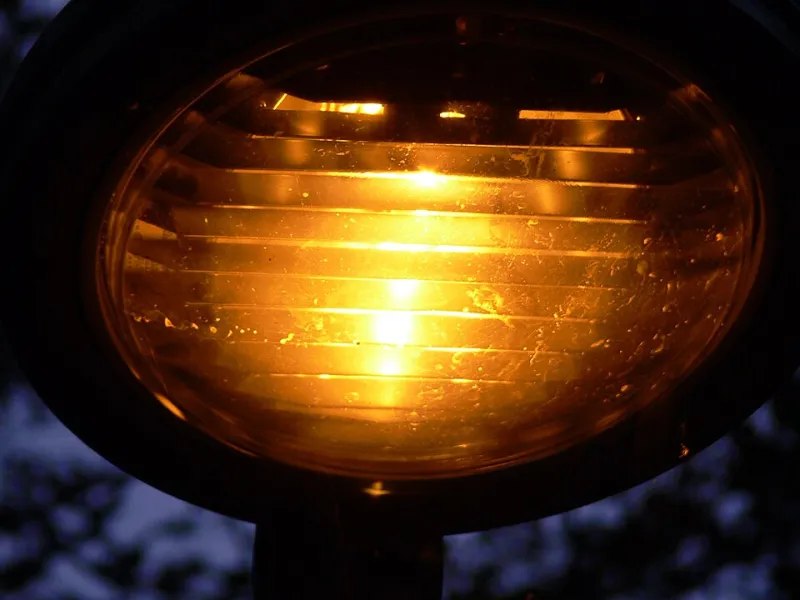
Photo: Lamiot, CC BY-SA 3.0, via Wikimedia Commons
For most of human history, night meant darkness. Stars provided orientation. Moonlight governed seasonal rhythms. The boundary between day and night shaped the behavior, physiology, and survival strategies of virtually every animal on Earth. That boundary is now eroding at an accelerating pace.
Artificial light at night — emitted by streetlamps, commercial signage, residential developments, and passing vehicles — has spread so extensively across the American landscape that roughly 99 percent of the contiguous United States now experiences some degree of light pollution. For EC Wildlife Refuge and the species that depend on its habitats, this transformation carries consequences that are only beginning to be fully understood.
The Biology of Darkness
Animals do not simply tolerate darkness — they are built for it. Circadian rhythms, the internal biological clocks that regulate sleep, feeding, hormone production, and reproduction, are calibrated to the natural cycle of light and dark. When artificial illumination interrupts that cycle, the physiological effects can be profound.
Melatonin, a hormone central to regulating circadian timing in vertebrates, is suppressed by light exposure. In mammals, birds, and even some invertebrates, disrupted melatonin cycles have been linked to impaired immune function, altered reproductive timing, and reduced foraging efficiency. A deer exposed to a brightly lit roadway at midnight is not simply inconvenienced — its hormonal signaling is actively being interfered with in ways that compound across a breeding season.
For nocturnal species, the problem is even more direct. Owls, bats, and many small mammals have evolved specifically to exploit the cover of darkness for hunting and predator avoidance. Persistent artificial light effectively shrinks their functional habitat, concentrating activity into darker patches and increasing competition and stress in those areas.
Migratory Birds and the Trap of the Urban Glow
Perhaps no group of animals illustrates the dangers of light pollution more dramatically than migratory birds. Hundreds of species that move through EC Wildlife Refuge's region navigate primarily at night, relying on celestial cues — stars, the moon, and the Earth's magnetic field — to maintain their course across thousands of miles.
Artificial light interferes with this navigation in several distinct ways. Bright urban areas create what researchers describe as a "skyglow" effect, a diffuse luminous haze that can be visible from dozens of miles away and effectively masks the star patterns birds use for orientation. Birds drawn toward this glow can become disoriented, circling illuminated structures until they exhaust themselves or collide with windows and buildings.
The scale of this mortality is staggering. Estimates from ornithological research suggest that between 100 million and one billion birds die annually in the United States from building collisions, with nighttime lighting identified as a primary contributing factor. During peak migration periods in spring and fall, a single illuminated skyscraper in a major city can attract and disorient thousands of birds in a single night.
For EC Wildlife Refuge, which serves as a critical stopover habitat for migratory species, the light environment of surrounding communities directly determines how many birds arrive in a condition capable of completing their journeys.
Aquatic Ecosystems Under Artificial Skies
The disruption does not end at the forest edge. Aquatic habitats within and adjacent to the refuge are equally vulnerable. Many freshwater invertebrates — including mayflies, caddisflies, and midges — use light to orient their emergence from water and to navigate toward mates. Artificial lighting along stream banks and pond edges can fatally attract these insects, drawing them away from the water and into lethal proximity to light sources.
This matters beyond the insects themselves. These invertebrates form the nutritional foundation of food webs supporting fish, amphibians, and the birds that feed on them. When light pollution depletes aquatic insect populations near developed areas, the effects ripple upward through multiple trophic levels.
Similarly, zooplankton — microscopic organisms essential to lake and pond ecosystems — undergo daily vertical migrations in the water column, moving toward the surface at night to feed on algae. Artificial light suppresses this behavior, altering nutrient cycling and potentially contributing to algal imbalances in affected water bodies.
Predator-Prey Dynamics Rewritten
Artificial light does not affect all species equally, and that asymmetry creates cascading ecological distortions. Some predators — certain species of spiders, for instance, and opportunistic mammals — actively exploit illuminated areas where insects and disoriented prey concentrate. Meanwhile, prey species that rely on darkness for concealment find their cover systematically stripped away.
This uneven disruption can tip competitive balances that have stabilized over evolutionary timescales. Species that were once effective nocturnal hunters may find their hunting windows compressed, while others gain an artificial advantage. The result is an ecosystem operating under rules it was never designed to accommodate.
What the Refuge Is Observing
Staff and researchers at EC Wildlife Refuge have documented behavioral shifts consistent with the broader scientific literature on light pollution. Reduced bat activity near the refuge's developed boundaries, altered songbird dawn chorus timing in areas adjacent to roadway lighting, and changes in amphibian calling behavior near lit parking areas all suggest that the refuge's ecological integrity is being tested at its margins.
These observations reinforce what conservation science has increasingly made clear: protecting a wildlife refuge requires managing not only what happens within its boundaries but also the sensory environment — light, sound, and chemical signals — that permeates from surrounding landscapes.
Practical Steps Toward Darker Skies
The encouraging reality about light pollution, unlike many environmental stressors, is that its effects are largely reversible. Turn off a light, and the darkness returns immediately. This immediacy makes light pollution one of the more tractable conservation challenges communities can address.
For homeowners and businesses near EC Wildlife Refuge, the most impactful actions include:
Shielding and directing light downward. Fully shielded fixtures that direct light only where it is needed eliminate the upward and lateral scatter that contributes most to skyglow and wildlife disruption.
Reducing intensity and color temperature. Warmer-toned LED lighting (3000K or below) is significantly less disruptive to wildlife than the cool, blue-white LEDs commonly used in streetlights and commercial settings. Dimmer lights cause less harm than brighter ones.
Using motion-activated lighting. Lights that illuminate only when needed eliminate the continuous exposure that most severely disrupts circadian rhythms.
Turning off nonessential lights at night. Particularly during peak migration windows — roughly late April through May and August through October — reducing indoor and outdoor lighting during overnight hours can meaningfully lower bird collision and disorientation risk.
At the institutional level, EC Wildlife Refuge supports engagement with local municipal planning processes to advocate for dark-sky-friendly lighting ordinances, participation in Lights Out programs coordinated by organizations such as the American Bird Conservancy, and ongoing monitoring to track light environment changes along the refuge's boundaries.
The Case for Reclaiming the Night
Darkness is not an absence. It is a resource — one that has shaped life on this planet for hundreds of millions of years and one that the species inhabiting EC Wildlife Refuge continue to depend upon. Every unnecessary light left burning through the night represents a small but real incursion into habitat that cannot be fenced, purchased, or restored through conventional conservation tools.
Understanding light pollution as an ecological force, rather than simply an aesthetic inconvenience, is the first step toward addressing it. EC Wildlife Refuge is committed to advancing that understanding and to working with the surrounding community to ensure that the refuge's wildlife retain access to one of their most fundamental needs: the natural cover of night.