Threads Beneath the Surface: How Fungal Networks Connect Your Garden to the Heart of EC Wildlife Refuge
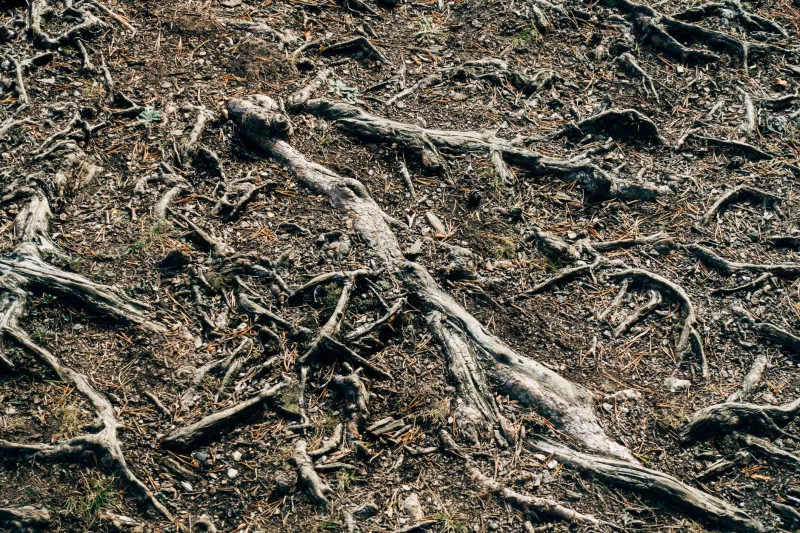
Most visitors to EC Wildlife Refuge arrive with their attention directed upward—toward canopy birds, flowering meadows, and the occasional flash of a white-tailed deer through the tree line. Understandably so. The visible world commands attention. But the processes that sustain everything seen above ground are largely invisible, unfolding in the compressed darkness of the soil, conducted by organisms that operate without fanfare and without recognition from the casual observer.
Among the most consequential of these hidden actors are mycorrhizal fungi—microscopic filaments that thread through soil particles, colonize plant roots, and form one of the most sophisticated communication and resource-sharing systems in the natural world. Their networks, sometimes called the "wood wide web" in popular science writing, are not a metaphor. They are a functional infrastructure, and their reach extends well beyond refuge boundaries into the surrounding landscape—including, potentially, the soil beneath your own yard.
What Mycorrhizal Networks Actually Do
The word "mycorrhiza" derives from the Greek for fungus and root, an etymology that captures the relationship precisely. These fungi attach to—and in some cases penetrate—the root cells of host plants, forming a partnership that is mutually beneficial rather than parasitic. The plant provides the fungus with sugars produced through photosynthesis. In return, the fungal filaments, known as hyphae, dramatically extend the plant's effective root system, reaching into soil pockets that roots alone could never access.
Through this extended network, plants gain access to phosphorus, nitrogen, and trace minerals that would otherwise remain locked in the soil matrix. Water uptake improves. Drought tolerance increases. But the exchange does not stop at basic nutrition.
Research conducted over the past three decades has demonstrated that mycorrhizal networks also facilitate the transfer of chemical distress signals between plants. When one tree in a forest is attacked by insects or pathogens, it can transmit warning compounds through the fungal network to neighboring trees, which then upregulate their own chemical defenses in anticipation of threat. This is not passive diffusion. It is a form of coordinated biological communication operating beneath the forest floor.
At EC Wildlife Refuge, the mature hardwood and mixed forest stands that define much of the interior landscape depend on these networks for their structural integrity. Remove the fungal layer—through soil compaction, pesticide application, or sustained disturbance—and the forest's resilience diminishes in ways that may not become apparent for years.
The Network Has Edges, and Your Yard May Be One of Them
Mycorrhizal networks are not confined to protected land. They extend into any soil that supports compatible plant communities, following the distribution of host plants across the landscape. In theory—and increasingly in documented practice—these networks can bridge fragmented habitats, linking refuge forest to adjacent residential properties where native plantings have been established.
This is not a trivial point. As development pressure around wildlife refuges intensifies across the United States, the biological connectivity that once existed between large contiguous habitats becomes increasingly dependent on what happens in the spaces between protected areas. Mycorrhizal networks represent one mechanism through which that connectivity can be maintained or restored, provided the surrounding landscape offers suitable conditions.
The critical variable is plant species composition. Mycorrhizal fungi are not generalists in every sense—different fungal species associate preferentially with different plant families. The fungal communities that sustain oak-dominated forests, for instance, differ substantially from those associated with agricultural monocultures or turf grass. A yard planted predominantly with non-native ornamentals or maintained as a conventional lawn offers little fungal common ground with the refuge's interior ecosystems.
Native plants, by contrast, share evolutionary histories with the fungal communities present in regional soils. When a homeowner near EC Wildlife Refuge plants native oaks, serviceberries, wild ginger, or trillium species, they are not merely adding habitat value in the conventional sense. They are potentially re-establishing the biological substrate through which fungal networks can extend, node by node, across a fragmented landscape.
Soil Health as a Conservation Variable
The practical implication of mycorrhizal ecology for residential landowners is straightforward, if counterintuitive to conventional gardening practice: the health of your soil is a conservation variable, not merely a horticultural one.
Several common land management practices actively suppress mycorrhizal communities. Broad-spectrum fungicide applications, which are frequently used on lawns and ornamental beds, do not discriminate between pathogenic fungi and beneficial mycorrhizal species. Synthetic phosphorus fertilizers, when applied in excess, reduce the plant's incentive to maintain mycorrhizal partnerships—when phosphorus is abundantly available, plants allocate fewer resources to sustaining fungal associations, and network density declines.
Soil compaction, caused by heavy foot traffic, machinery, or the removal of ground cover, physically disrupts hyphal threads and eliminates the pore spaces that fungal filaments require to proliferate. Tilling, while effective for short-term weed suppression, severs established networks and resets the colonization process from the beginning.
Conversely, management practices that prioritize soil structure and organic matter content actively support mycorrhizal development. Mulching with wood chips or leaf litter mimics natural forest floor conditions and feeds the fungal communities beneath. Reducing or eliminating synthetic inputs allows existing networks to stabilize and expand. Planting native species appropriate to regional soil types introduces compatible hosts that fungal communities can colonize.
None of these practices require specialized expertise or significant financial investment. They represent, in most cases, a reduction in management intensity rather than an increase.
Connecting Private Land to a Larger Purpose
EC Wildlife Refuge's conservation mission has always extended beyond the formal boundaries of the refuge itself. The ecological processes that sustain the refuge's wildlife communities—hydrology, seed dispersal, pollinator movement, and the subterranean networks described here—do not recognize property lines. Protecting those processes requires engagement with the broader landscape, including the residential and agricultural land that surrounds and interpenetrates protected areas.
Mycorrhizal networks offer a compelling illustration of why that engagement matters. A single yard planted with native species and managed without synthetic fungicides contributes modestly to regional network connectivity. A neighborhood, a watershed, a county where such practices are widely adopted contributes substantially.
Visitors to EC Wildlife Refuge who walk the forested trails and experience the structural complexity of a mature, ecologically intact woodland are, in a sense, witnessing the above-ground expression of what happens when mycorrhizal networks are allowed to function without interruption over decades. That complexity did not emerge from the trees alone. It emerged from the accumulated relationships between trees, fungi, soil bacteria, decomposers, and the countless other organisms that constitute a functioning ecosystem.
The invitation to participate in that system does not require a trip to the refuge. It begins in the soil beneath your feet, in the planting decisions you make this season, and in the management choices you carry forward from here.
For guidance on native plant species appropriate to this region and compatible with local soil fungal communities, EC Wildlife Refuge's education staff can provide species lists and planting recommendations tailored to residential landscapes. The network, as it turns out, is waiting for more nodes.