Reading the Ground Beneath Your Feet: What Soil Layers Reveal About EC Wildlife Refuge's Ecological History
Most visitors to EC Wildlife Refuge look up and outward—at the canopy, the waterways, the birds moving through morning light. Relatively few look down. Yet the ground beneath every trail, every restored meadow, and every wetland margin holds a record of this landscape's history that no field guide or archive document can fully replicate. Soil is not simply the medium in which plants grow. It is an accumulated testimony to everything that has happened here—every fire, every flood, every period of agricultural use, every decade of recovery. Learning to read that testimony is one of the most powerful tools available to ecologists working to understand and restore the refuge's native ecosystems.
Soil as Stratigraphy: The Logic of Layers
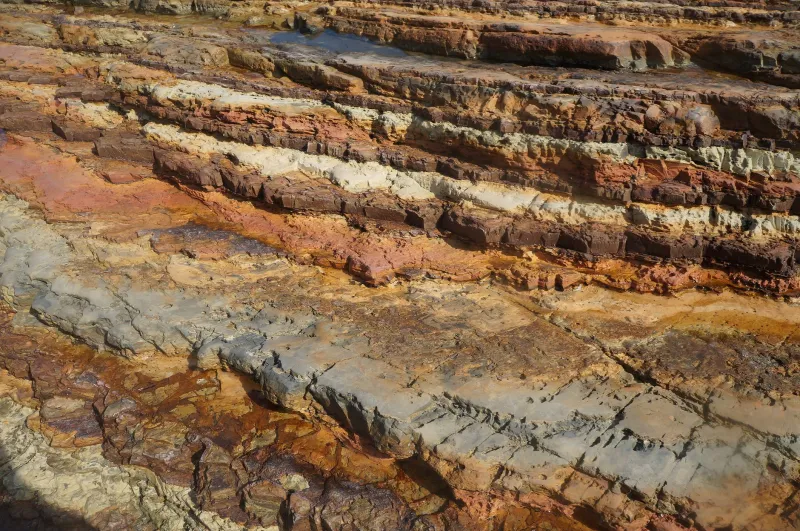
Geologists have long understood that rock strata encode time—that the order, composition, and character of successive layers tell a sequential story of environmental conditions. Soil science applies the same logic to the uppermost skin of the Earth. A soil profile—a vertical cross-section from the surface down to bedrock or parent material—is divided into horizons, each with distinct physical and chemical properties that reflect the processes operating when that layer was formed.
The uppermost horizon, typically dark with organic matter, represents the most recent ecological activity: decomposing leaf litter, fungal networks, root exudates, and the metabolic byproducts of billions of microbial organisms. Deeper horizons are older, their chemistry shaped by different vegetation communities, different moisture regimes, and different disturbance histories. A trained soil scientist examining a fresh profile at EC Wildlife Refuge can identify evidence of past land use within minutes—not because the history was written down somewhere, but because the soil itself has preserved it.
Charcoal, Pollen, and the Fingerprints of Fire
Among the most informative markers in refuge soils are charcoal fragments—the durable residue of past fire events. Charcoal does not decompose readily and can persist in soil for thousands of years. Its presence at a particular depth indicates that fire moved through the landscape at a time corresponding to that stratigraphic layer. Its abundance and distribution across a site can reveal whether fires were frequent low-intensity surface events—the kind historically associated with Indigenous burning practices and natural lightning ignition—or rare, catastrophic events that consumed the entire organic layer.
In many eastern and midwestern landscapes, soil charcoal records reveal a pattern: frequent fire before European settlement, an abrupt cessation in the mid-to-late 1800s as agricultural development and active fire suppression took hold, and a subsequent shift in vegetation composition that is still playing out today. Refuge soils in fire-adapted ecosystems—oak savannas, longleaf pine systems, tallgrass prairie remnants—often contain charcoal layers that document this transition with remarkable clarity.
Pollen preserved in anaerobic soil conditions—particularly in wetland and pond sediments—adds another dimension to this record. Pollen grains are extraordinarily resistant to decay when oxygen is absent, and their morphology is species-specific enough to allow palynologists to reconstruct past plant communities from sediment cores. A core taken from a refuge pond may reveal that the surrounding landscape supported a closed-canopy forest five hundred years ago, transitioned to an open grassland following a disturbance event, and then shifted again as land use changed. Each of those vegetation communities supported a different suite of animal species, and the pollen record provides the baseline against which current conditions can be compared.
The Chemistry of Disturbance
Beyond physical markers, soil chemistry encodes the chemical legacy of past land use. Agricultural soils typically show elevated phosphorus concentrations reflecting decades of fertilizer application—a signature that persists long after farming has ceased and that continues to influence plant community composition by favoring nutrient-tolerant species over the slower-growing natives that characterize high-quality habitat. Heavy metals from historical industrial activity, pesticide residues from mid-twentieth-century agricultural practices, and altered pH profiles from acid rain deposition all leave measurable traces that affect the current ecology of a site.
At EC Wildlife Refuge, soil chemistry surveys conducted during restoration planning have revealed significant variation across the landscape—variation that directly informs which areas are candidates for immediate native plant establishment and which require remediation work before restoration plantings are likely to succeed. A field that appears visually uniform may contain pockets of elevated phosphorus that will favor invasive cool-season grasses over the native warm-season species that refuge managers are attempting to reestablish. Without soil analysis, those interventions risk failure for reasons that would never be apparent from surface observation alone.
Soil Biology: The Living Archive
The chemical and physical record preserved in soil is complemented by a biological one. Soil microbial communities are not static—they shift in composition in response to the plant communities above them, the disturbance history they have experienced, and the chemical environment they inhabit. Areas that supported native plant communities for extended periods tend to harbor diverse and functionally complex microbial networks, including the mycorrhizal fungi that form mutualistic partnerships with native plant root systems.
Soils with long agricultural histories, or those that have experienced repeated tillage, often show dramatically reduced mycorrhizal diversity. This matters for restoration because many native plant species—particularly those in prairie and savanna ecosystems—depend on mycorrhizal partnerships for nutrient acquisition and drought tolerance. Transplanting native plugs into a soil that lacks appropriate fungal partners can result in poor establishment even when all other conditions appear favorable. Soil biology surveys allow restoration practitioners to identify sites where mycorrhizal inoculation may be necessary to support successful plant establishment.
Invertebrate communities in the soil tell a parallel story. Earthworm species composition, for instance, can distinguish native soil communities from those that have been invaded by non-native European earthworm species—a distinction that carries significant implications for forest floor ecology, since non-native earthworms consume leaf litter at rates that can eliminate the duff layer that many woodland wildflowers and ground-nesting birds depend on.
Predicting Restoration Outcomes
The practical value of reading the soil archive lies in its predictive power. Restoration ecology has historically operated with significant uncertainty—practitioners plant native species, manage invasives, and reintroduce disturbance regimes, then wait to see what takes hold. Soil science is improving the odds by identifying, before restoration begins, which sites are most likely to support successful reestablishment of target communities and which will require more intensive intervention.
At EC Wildlife Refuge, soil data are integrated into restoration prioritization frameworks that weigh multiple factors: the depth and integrity of the organic horizon, the presence or absence of appropriate mycorrhizal communities, the chemical legacy of past land use, and the stratigraphic evidence of what plant communities the site historically supported. Areas where the soil record indicates long continuity with native vegetation—where charcoal layers suggest regular fire, where pollen profiles show persistent native plant dominance, where mycorrhizal networks remain intact—are prioritized for restoration because the biological infrastructure to support recovery is already present.
Areas with more heavily degraded soil profiles require a different approach: often a longer timeline, additional inputs, and realistic expectations about which components of the native community can be reestablished in the near term versus which may require decades of soil rebuilding before they are achievable.
The Ground as Guide
There is something quietly profound about the idea that the land remembers what we have done to it—and what was here before we arrived. The soils of EC Wildlife Refuge are not passive substrate. They are a dynamic, layered record of ecological history that continues to shape the trajectory of every restoration effort, every habitat management decision, and every species that depends on this landscape for survival.
For visitors walking the refuge trails, the invitation is simple: look down occasionally. The ground beneath your feet is not just dirt. It is an archive, a laboratory, and a forecast—all at once.