Invisible and Irreplaceable: Why the Species You Never See Define Conservation Success at EC Wildlife Refuge
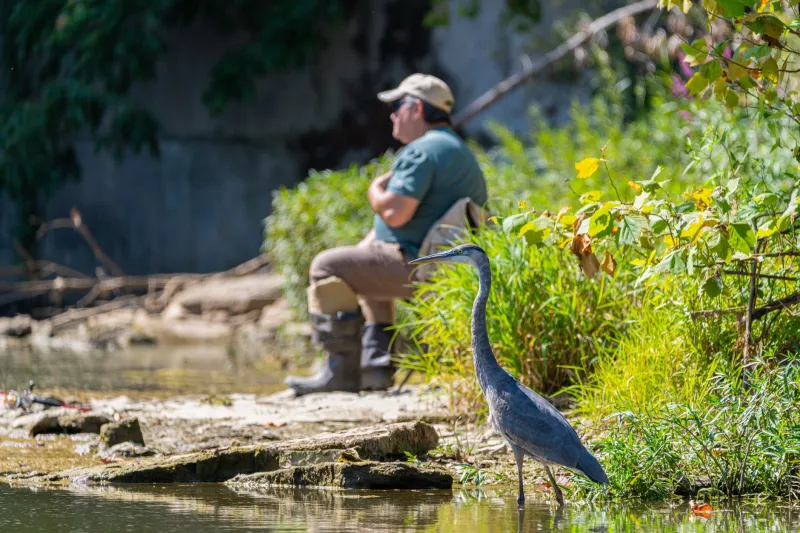
We tend to measure conservation progress by what we can see — the osprey returning to a nest, the deer grazing at dusk, the heron standing motionless in the shallows. But the species that matter most to ecological integrity are frequently the ones that go to extraordinary lengths to remain hidden. At EC Wildlife Refuge, the health of our most elusive residents may be the truest measure of how well we are doing our job.
The Visibility Bias in Conservation
Human beings are visual creatures, and conservation culture has not entirely escaped the consequences of that fact. Fundraising campaigns feature charismatic megafauna. Visitor center exhibits showcase species that can be reliably observed from a boardwalk. Success stories are told in terms of animals seen, populations counted in the open, nests documented on a webcam.
This is understandable. Visible wildlife generates emotional connection, and emotional connection generates the public support that conservation programs depend upon. There is nothing inherently wrong with celebrating the return of a bald eagle to a previously degraded watershed.
The problem arises when visibility becomes the primary metric of ecological health — when we mistake the presence of observable species for evidence of a functioning ecosystem, and overlook the cryptic, secretive, and behaviorally concealed species whose population status tells a far more rigorous story.
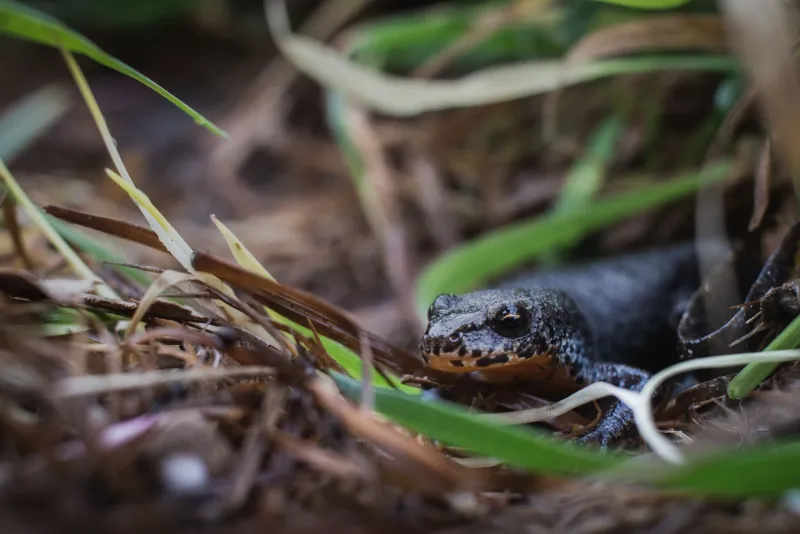
At EC Wildlife Refuge, we have been forced to confront this bias directly. The species that are thriving most visibly are not always the species whose status reveals the most about ecosystem quality. The ones that do — the wood-roofed salamanders sheltering beneath decaying logs, the bobcats moving through the landscape almost entirely at night, the bog turtles occupying a handful of specialized wetland patches — are species that most visitors will never see. Their persistence at the refuge, however, is among the strongest evidence we have that our conservation work is achieving something real.
What Cryptic Species Actually Tell Us
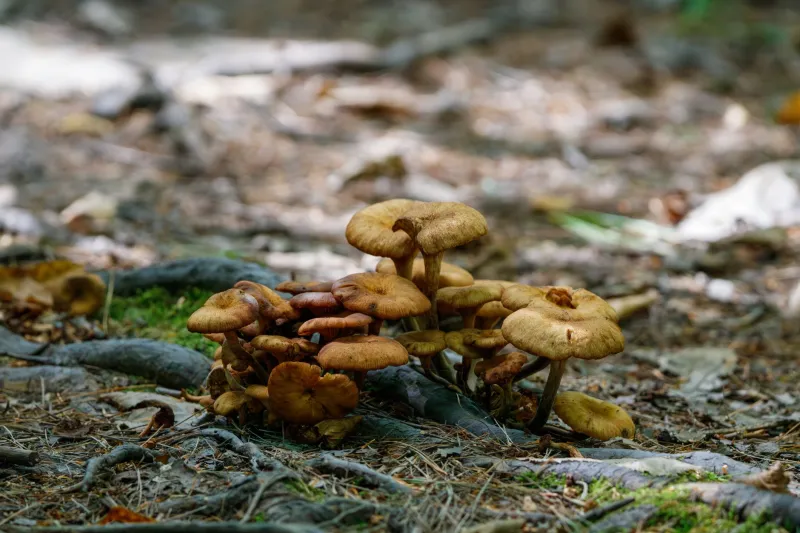
Ecologists use the term "cryptic species" broadly to describe organisms that actively avoid detection — through behavioral concealment, nocturnal activity, microhabitat specialization, or physical camouflage so effective that even trained observers frequently overlook them. These species are not simply shy; their concealment strategies are evolutionary responses to predation pressure, and they reflect millions of years of selection for survival in specific, often narrow ecological niches.
Because cryptic species tend to be highly specialized, they are acutely sensitive to habitat degradation. A bobcat requires large, contiguous home ranges with minimal human disturbance and sufficient prey diversity to sustain year-round residency. A wood-roofed salamander needs a specific combination of coarse woody debris, soil moisture, and fungal substrate that only intact, mature forest can reliably provide. A bog turtle depends on a mosaic of open, spring-fed wetlands and adjacent upland habitat that has become extraordinarily rare across the northeastern United States.
When these species are present and reproducing at a site, it means the site is meeting a demanding set of ecological requirements. Their absence, conversely, is a sensitive early warning of degradation that may not yet be apparent through cruder measures.
This is why, at EC Wildlife Refuge, detecting and monitoring cryptic species is not a peripheral scientific activity — it is central to our assessment of conservation outcomes.
The Technology Closing the Detection Gap
For much of the history of wildlife biology, monitoring cryptic species was a labor-intensive and often frustrating enterprise. Camera traps, track plates, and live-trapping programs could document presence and, with sufficient effort, estimate abundance — but these methods were expensive, time-consuming, and inevitably missed a significant proportion of the animals present at a site.
Two technological developments have substantially changed the picture: environmental DNA sampling and advanced motion-sensor camera networks.
Environmental DNA, or eDNA, refers to genetic material shed by organisms into their surroundings — skin cells, mucus, feces, urine, and other biological material that disperses through water, soil, and air. By collecting water or soil samples and analyzing them for species-specific genetic sequences, scientists can detect the presence of target species with a sensitivity that traditional survey methods cannot approach. A single water sample from a pond can confirm the presence of a wood turtle or an eastern hellbender salamander without a single animal ever being captured, handled, or disturbed.
At EC Wildlife Refuge, eDNA sampling has been incorporated into the aquatic monitoring program for three consecutive seasons. The results have been illuminating. Several amphibian species were confirmed at locations where visual surveys had produced no detections. More significantly, eDNA analysis revealed the presence of a state-listed salamander species in a refuge wetland that had not been documented in that area for over two decades — a finding that immediately triggered a revised management protocol for the surrounding habitat.
Motion-sensor camera networks have similarly expanded the refuge's capacity to document nocturnal and behaviorally cryptic mammals. A grid of strategically placed cameras — positioned along travel corridors, near water sources, and at habitat edges — has documented bobcat activity at multiple refuge locations, confirmed the presence of river otter along the main drainage corridor, and provided the first photographic evidence of a breeding-season mink pair at the refuge in the modern monitoring era.
These are not incidental discoveries. They are data points in a systematic effort to understand which species are using the refuge, where, when, and at what population levels.
Rethinking What Success Looks Like
The honest conversation about conservation success requires acknowledging something that does not always translate easily into public communication: a refuge can host impressive numbers of visible, charismatic wildlife and still be failing the most meaningful ecological tests. Deer, Canada geese, and red-tailed hawks are adaptable, generalist species that persist — and often thrive — in significantly degraded habitats. Their abundance tells us relatively little about the ecological quality of the landscape they occupy.
The presence of a reproducing bobcat population, by contrast, tells us that the landscape supports adequate prey diversity, sufficient undisturbed cover, and enough spatial extent to meet the territorial requirements of a wide-ranging carnivore. The confirmation of a state-listed salamander species tells us that soil chemistry, moisture regimes, and forest structure have been maintained at a standard that this exacting species requires. These are meaningful ecological achievements, and they deserve to be recognized as such — even when they cannot be easily photographed from a visitor trail.
At EC Wildlife Refuge, we are committed to developing the monitoring tools, the scientific partnerships, and the public communication strategies necessary to make invisible success visible. The species that most visitors will never encounter are, in many respects, the ones we are most proud to be protecting. Their presence in this landscape is not incidental to our mission. It is the mission.