Frequencies of the Wild: The Secret Acoustic Languages Animals Use to Survive at EC Wildlife Refuge
Human hearing occupies a narrow corridor of the acoustic spectrum—roughly 20 to 20,000 hertz. It feels like a wide range until you consider what lies on either side. Below that threshold, elephants send messages through the ground itself. Above it, bats paint three-dimensional portraits of their environment in milliseconds. At EC Wildlife Refuge, the air, water, and soil are saturated with biological sound that no unaided human ear will ever register. For decades, this dimension of wildlife communication remained largely invisible to science. Today, it is becoming one of the most revealing windows into ecosystem health we have ever opened.
Echolocation: Precision Navigation in Total Darkness
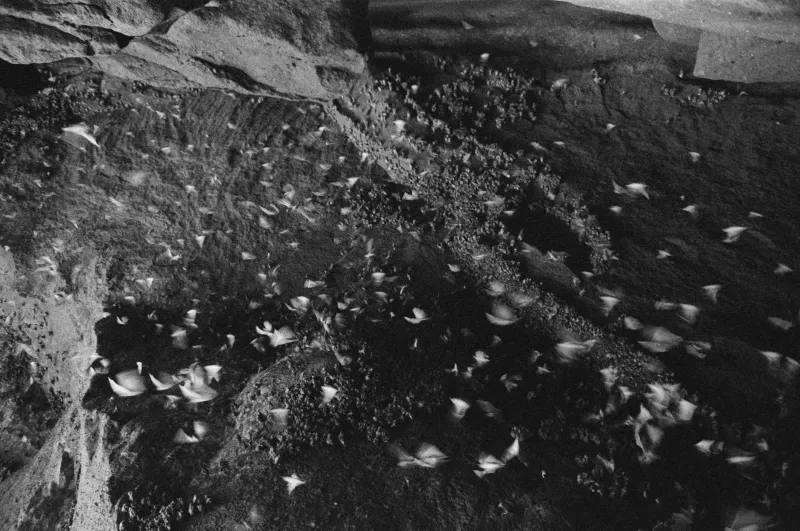
Of all the acoustic phenomena documented at the refuge, bat echolocation remains among the most technically sophisticated. Several bat species use the refuge's forested corridors and wetland edges as critical foraging habitat during warmer months. Each species emits ultrasonic pulses—some exceeding 100,000 hertz—and interprets the returning echoes with a resolution that would make sonar engineers envious.
A big brown bat, for instance, can detect an insect the size of a fruit fly at distances of several meters, distinguishing its wing-beat frequency from background clutter in real time. The calls are not simply loud squeaks. They are structured, species-specific signals that vary in duration, frequency sweep, and pulse interval depending on whether the animal is searching open space, navigating dense vegetation, or closing in on prey. Researchers at the refuge use full-spectrum acoustic detectors to record these calls overnight, generating data sets that reveal which species are present, how frequently they are foraging, and whether habitat changes are affecting their activity patterns.
This monitoring matters because bat populations are sensitive indicators of insect abundance. A decline in call activity often precedes or accompanies a collapse in the invertebrate community—a signal that something upstream in the food web has gone wrong.
Below the Threshold: Infrasound and the Language of the Largest Animals
At the opposite end of the spectrum, infrasound—frequencies below 20 hertz—carries information across distances that would make radio engineers take notice. Elephants are the most studied practitioners of this form of communication, capable of producing rumbles as low as 14 hertz that travel through both air and ground simultaneously. Receiving elephants detect these signals through their feet and the sensitive skin of their trunks, essentially reading vibrations in the substrate.
While African and Asian elephants are not native to North American refuges, the principle of infrasonic communication is not confined to megafauna on other continents. Alligators, which inhabit wetland areas similar to those managed at EC Wildlife Refuge, produce infrasonic bellows during breeding season that cause the water surface above them to dance in visible ripples—a phenomenon called the "water dance." These signals coordinate mate attraction and territorial assertion across areas too large for visual cues to be practical.
Low-frequency communication is also documented in several bird species. Ostriches and cassowaries are well-known examples, but research has shown that some North American species—including certain grouse during lekking displays—incorporate infrasonic components into their courtship behavior. The booming of a greater prairie-chicken's air sacs, for example, produces frequencies that carry far beyond what spectators at a lek typically perceive as audible.
Subsonic Signals in the Water Column
Aquatic environments present their own acoustic complexity. Water transmits sound approximately four times faster than air and over vastly greater distances, making it a highly efficient medium for biological communication. Fish species that share habitat with refuge waterways use a variety of low-frequency vocalizations for spawning aggregation, territory defense, and predator response. Catfish, drum, and several sunfish species produce sounds through specialized muscles that vibrate the swim bladder—an organ most people associate exclusively with buoyancy.
In marine and estuarine systems adjacent to coastal refuges across the United States, the acoustic environment is even richer. Bottlenose dolphins use ultrasonic click trains for echolocation while simultaneously maintaining social bonds through lower-frequency whistles that function almost like individual name tags. Manatees, often considered silent animals, communicate through a suite of vocalizations that span a broad frequency range and appear to play a critical role in mother-calf bonding.
Listening Technology: Science Finally Catching Up to Nature
For most of the twentieth century, the tools required to systematically study these acoustic channels simply did not exist in affordable or portable forms. That has changed dramatically. Autonomous recording units—weatherproof devices that can be deployed in remote habitat for weeks at a time—now allow refuge biologists to collect continuous acoustic data without disturbing the animals they are studying. Paired with machine learning software trained to identify species-specific call signatures, these systems can process thousands of hours of recordings and flag detections with accuracy that rivals expert human review.
At EC Wildlife Refuge, acoustic monitoring has been integrated into broader biodiversity assessment protocols. Bat detectors positioned along habitat transects provide seasonal activity indices. Hydrophones placed in refuge waterways capture the spawning choruses of fish species. In areas where mammal surveys are conducted, low-frequency recording equipment is tested to detect whether species known to use infrasound are present but visually cryptic.
The data emerging from these efforts are not merely catalogues of who is calling and when. They are functional maps of ecological relationships. When a bat species disappears from a monitoring station, it prompts questions about roost availability, insect prey, and pesticide exposure. When fish vocalizations increase in a restored wetland, it suggests that the habitat reconstruction is supporting reproductive behavior—a meaningful benchmark of success.
What Disruption Sounds Like
Understanding these acoustic channels also clarifies the stakes of human-generated noise—a topic the refuge has addressed in previous coverage. But noise pollution is not the only acoustic threat. Habitat loss removes the structural complexity that many species depend on to shape and direct their calls. A bat navigating a cleared forest edge no longer has the vegetation architecture that helps it interpret returning echoes. A fish displaced from a quiet backwater into a channelized stream experiences a fundamentally different acoustic environment—one that may mask the calls it relies on to locate mates.
Temperature changes also affect acoustic transmission. Warmer water alters the speed and propagation of sound, potentially disrupting the ranges over which aquatic species can effectively communicate. This is a dimension of climate impact that receives relatively little public attention but carries real consequences for species that depend on acoustic coordination for reproduction.
A New Vocabulary for Conservation
The capacity to detect and interpret frequencies beyond human hearing is more than a scientific curiosity. It is a conservation tool of growing importance. Acoustic indices—mathematical summaries of the complexity and diversity of a soundscape—are increasingly used as proxy measures of biodiversity, allowing managers to assess ecosystem health across large areas with a fraction of the effort required by traditional survey methods.
At EC Wildlife Refuge, this technology is helping staff identify which habitat restoration actions are producing measurable changes in wildlife activity, not just in visible species but in the full acoustic community that inhabits a landscape. Every ultrasonic pulse from a foraging bat, every infrasonic rumble from a displaying bird, every subsonic chorus from a spawning fish population is a data point in an ongoing assessment of how well the refuge is fulfilling its mission.
The wild has always been speaking in these frequencies. We are only now learning how to listen.